

ALT: Woman using an EMS pelvic floor trainer with probe for at-home Kegel muscle rehabilitation and bladder control
Why an EMS Pelvic Floor Trainer with Probe Is Changing How Women Approach Pelvic Health
Key Conclusion: An EMS pelvic floor trainer with probe delivers targeted electrical muscle stimulation directly to the pelvic floor, making it one of the most clinically effective tools available for postpartum recovery, stress urinary incontinence, and overall pelvic floor rehabilitation. Unlike surface pads or passive Kegel apps, probe-based EMS technology reaches the deep muscle fibers that voluntary contractions alone often cannot engage — offering a non-invasive, drug-free path to real, measurable improvement.
Pelvic floor dysfunction is far more common than most people realize, yet it remains one of the least discussed health concerns among women across all age groups. Whether triggered by childbirth, hormonal changes, aging, or sedentary lifestyles, weakened pelvic floor muscles can manifest as urinary leakage, pelvic pressure, reduced sexual function, and even lower back discomfort.
The good news is that modern electrotherapy technology has brought clinical-grade solutions directly into the home. A high-quality EMS pelvic floor trainer with probe empowers you to take charge of your pelvic wellness on your own schedule — no clinic visits, no prescriptions, no embarrassment. This guide walks you through everything you need to know, from how these devices work to how to choose and use the best one for your needs.
Who Benefits Most from Probe-Based EMS Pelvic Floor Training
✅ Applicable Scenarios:
- Postpartum women recovering from vaginal delivery who experience urinary leakage or reduced muscle tone
- Perimenopausal and postmenopausal women experiencing pelvic organ prolapse symptoms or bladder urgency
- Adults dealing with stress urinary incontinence triggered by sneezing, laughing, or physical activity
- Women returning to exercise after pelvic surgery who need gradual, controlled muscle re-engagement
- Individuals who struggle to correctly identify and voluntarily contract their pelvic floor muscles without guidance
- Those who have tried manual Kegel exercises without consistent or noticeable results
❌ Not Applicable/Cautions:
- Individuals with implanted electronic devices such as pacemakers or spinal cord stimulators — electrical stimulation may interfere with device function
- Pregnant women, as uterine stimulation during pregnancy poses potential risks unless specifically cleared by a physician
- People with active pelvic infections, open wounds, or recent pelvic surgery until full medical clearance is obtained
- Those with certain neurological conditions affecting pelvic sensation — consult a healthcare provider before use
- Individuals with known allergies to the probe materials or electrical stimulation intolerance
Understanding the Science: Why Probe-Based EMS Works for Pelvic Floor Recovery
The pelvic floor is a group of deep muscles, ligaments, and connective tissue forming the base of the pelvis. These structures support the bladder, uterus, and rectum while playing critical roles in urinary and bowel continence, sexual response, and spinal stability. When these muscles become weakened or dyscoordinated — through childbirth, hormonal shifts, or prolonged inactivity — the consequences can range from mildly inconvenient to significantly life-limiting.
Traditional Kegel exercises, while beneficial, carry a well-documented problem: studies consistently show that a substantial percentage of women perform them incorrectly, either contracting the wrong muscles or performing incomplete movements. Without tactile or neuromuscular feedback, many women spend months doing ineffective exercises and seeing no improvement.
This is precisely where EMS pelvic floor technology with an internal probe changes the equation. Electrical Muscle Stimulation (EMS) uses low-frequency electrical impulses to directly contract muscle fibers. When delivered via an intravaginal probe, these impulses reach the precise muscle groups that are difficult to activate voluntarily — ensuring that every session produces real physiological work, regardless of whether the user can feel or consciously control those muscles.
According to research published in peer-reviewed urology and physiotherapy journals, electrical stimulation of the pelvic floor has demonstrated meaningful clinical outcomes in reducing incontinence episodes, improving muscle strength scores, and enhancing quality of life. The National Institute of Diabetes and Digestive and Kidney Diseases (NIDDK) recognizes pelvic floor exercises and neuromuscular stimulation as first-line behavioral interventions for urinary incontinence — validating the therapeutic foundation behind these devices.
The market for home-based pelvic health technology has grown substantially in recent years, driven by increasing awareness of pelvic floor dysfunction, greater consumer access to electrotherapy devices, and a broader cultural shift toward self-managed, non-pharmaceutical wellness solutions. Probe-based EMS trainers sit at the intersection of clinical science and consumer accessibility — bridging the gap between what physical therapists offer in specialized clinics and what individuals can safely and effectively do at home.
For those exploring the broader landscape of at-home electrotherapy, iStim's complete range of EMS and Kegel devices reflects this same professional-grade philosophy — combining ISO-certified manufacturing with intuitive home use design.
How to Use an EMS Pelvic Floor Trainer with Probe: A Practical Guide
Three-Step Quick Start for First-Time Users
Step 1: Prepare and Position the Probe Correctly
Before your first session, thoroughly clean the probe according to the manufacturer's instructions — typically with mild soap and warm water, followed by drying. Apply a small amount of water-based conductive gel to the probe surface to ensure good electrical contact and comfortable insertion. Find a comfortable position, such as lying on your back with knees bent or sitting reclined. Gently insert the probe as directed, ensuring it is properly seated. Proper placement is essential for targeted stimulation of the pelvic floor muscles rather than surrounding tissue. Allow yourself a few relaxed breaths before proceeding.
Step 2: Select the Right Program and Intensity
Most professional EMS pelvic floor trainers offer multiple program modes — typically ranging from gentle toning programs to more intensive strengthening or rehabilitation modes. For first-time users, always begin at the lowest available intensity setting. Gradually increase until you feel a gentle, rhythmic contraction of the pelvic floor muscles — a sensation similar to voluntary Kegel contractions but generated automatically. You should not experience pain or sharp discomfort. If you do, reduce the intensity immediately. Most beginner sessions last between 15 and 20 minutes, depending on device programming and individual tolerance.
Step 3: Complete the Session and Care for Your Device
When your session ends, power down the device before gently removing the probe. Clean the probe promptly after each use as directed to maintain hygiene and device longevity. Many programs recommend sessions three to five times per week for optimal results, with gradual intensity progression over several weeks. Keep a simple log of your sessions, noting any changes in symptoms such as reduced leakage episodes or improved muscle awareness. Consistency is the most important factor in achieving meaningful, lasting pelvic floor improvement.
Comparing Your Options: Probe EMS vs. Other Pelvic Floor Training Methods
Choosing the right approach to pelvic floor rehabilitation depends on your specific condition, lifestyle, and goals. The table below provides a clear comparison across the most common methods available to home users and clinical patients.
| Comparison Dimension | EMS Pelvic Floor Trainer with Probe | Manual Kegel Exercises | Biofeedback Device (Surface) |
|---|---|---|---|
| Muscle Activation Accuracy | High — direct intramuscular stimulation | Variable — depends on correct technique | Moderate — measures surface activity |
| Suitable for Beginners | Yes — works even without voluntary control | Challenging — requires correct muscle identification | Moderate — needs some baseline awareness |
| Clinical Evidence Base | Strong — supported by urology and pelvic PT research | Moderate — effective when performed correctly | Moderate — useful for feedback, not stimulation |
| Home Use Convenience | High — designed for independent home use | High — no equipment needed | Moderate — requires device and setup |
| Postpartum Suitability | Yes — when cleared by healthcare provider | Yes | Yes |
| Drug-Free & Non-Invasive | Yes | Yes | Yes |
| Results Timeline | Typically weeks with consistent use | Months with consistent, correct practice | Variable |
The data above makes a compelling case for probe-based EMS as a particularly efficient and reliable method, especially for users who are new to pelvic floor training or who have not seen results from manual exercises alone.
Choosing the Best EMS Pelvic Floor Trainer with Probe: What Actually Matters
Understanding What Makes a Kegel Trainer Probe Effective
Not all EMS pelvic floor devices are created equal. When evaluating options, several technical and design factors directly influence both safety and therapeutic outcome. The quality of the electrical waveform — specifically whether the device uses clinically validated frequencies for pelvic floor stimulation — is among the most important considerations. Low-frequency programs (typically in the range used in physical therapy) are associated with improved muscle endurance and reduced urinary urgency, while slightly higher frequencies are often used for strength and tone.
Probe design and material quality matter significantly for both comfort and effectiveness. A well-engineered probe distributes electrical stimulation evenly across the relevant muscle groups, minimizing discomfort and maximizing therapeutic contact. Medical-grade materials are essential for safety with repeated use.
Which EMS Pelvic Floor Trainers Include a Probe?
This is one of the most common questions prospective buyers ask — and for good reason. Many EMS and TENS devices on the market are designed for surface electrode use only and do not include or support internal probes. Devices specifically designed as EMS pelvic floor trainers with probe are a distinct category, engineered to deliver precise internal stimulation safely.
iStim's Kegel EMS devices are purpose-built for this application. Designed with pelvic floor rehabilitation in mind, they pair professional-grade EMS technology with specialized probe accessories to deliver targeted stimulation where it matters most. iStim's devices are backed by ISO-certified manufacturing from Taiwan, reflecting the same quality standards used in clinical electrotherapy equipment — making them a trustworthy choice for home users who want clinical results without clinical costs.
Program Versatility and User Control
The best devices offer multiple program modes and adjustable intensity levels, allowing users to progress systematically as their pelvic floor strength improves. A device that only offers a single mode will quickly become limiting as your needs evolve. Look for devices that support both passive stimulation programs (where the device does all the work) and active-assist programs (where stimulation supports your voluntary contractions) — this dual approach accelerates neuromuscular re-education.
Ease of Use and Hygiene Design
For a device used internally, ease of cleaning and maintaining hygiene is non-negotiable. Quality EMS pelvic floor trainers feature probe designs that are smooth, seamless where possible, and compatible with standard medical-grade cleaning protocols. The device interface should be intuitive enough that adjusting programs and intensity does not require fumbling through complex menus during a session.
Safety Certifications and Manufacturing Standards
Always prioritize devices from manufacturers with verifiable quality certifications. iStim's ISO-certified manufacturing ensures that every device meets internationally recognized standards for safety, consistency, and performance — a critical factor when choosing an electrotherapy device intended for sensitive internal use.
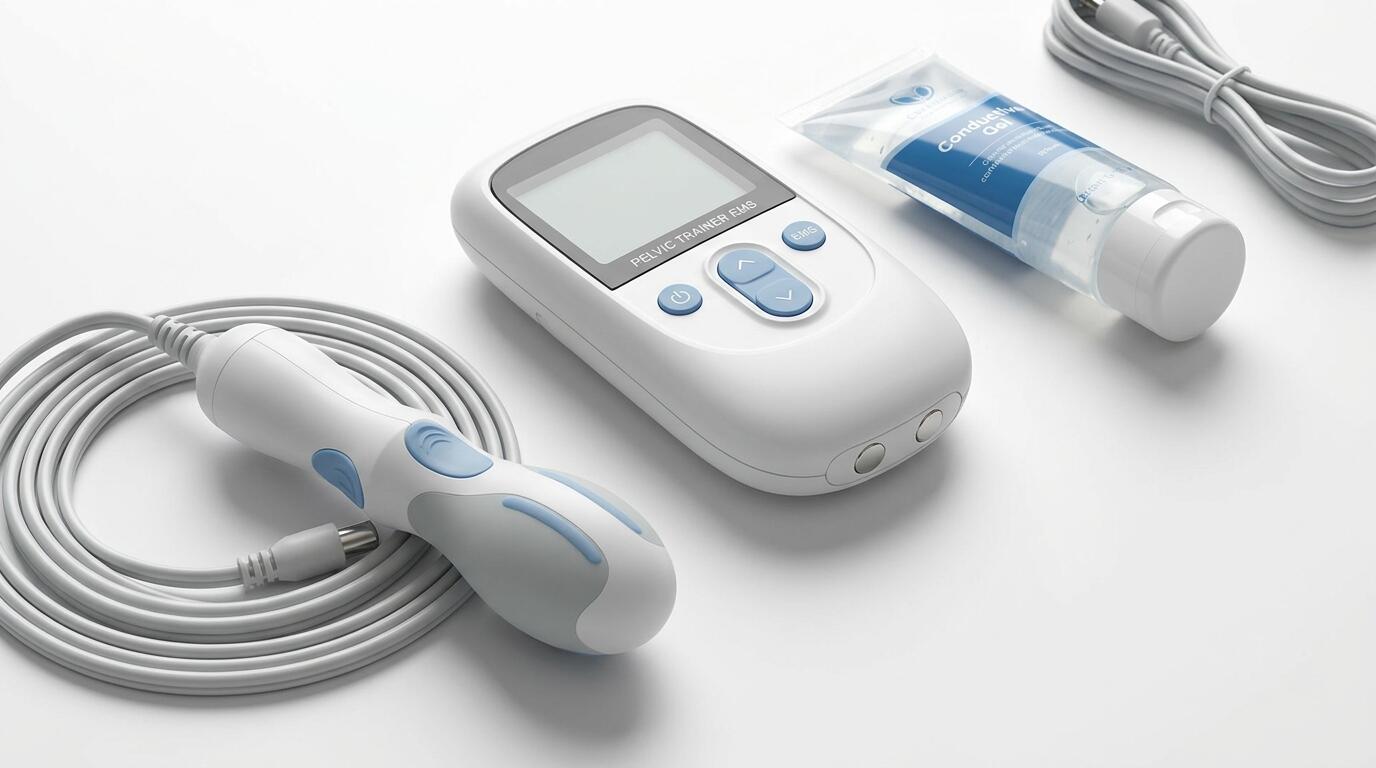
ALT: Close-up of an EMS pelvic floor trainer with probe accessories used for at-home Kegel exercise and urinary incontinence therapy
Advanced Considerations: Getting the Most from Your Pelvic Floor EMS Trainer
Handling Special Situations
If You Experience Discomfort During Use
Mild tingling or a gentle pulling sensation during stimulation is normal. Actual pain, burning, or sharp discomfort is not. If you experience the latter, stop the session immediately, reduce the intensity for your next session, and consult your healthcare provider if symptoms persist. It is also worth verifying that the probe is correctly positioned and that adequate conductive gel has been applied.
If You Are Not Noticing Results After Several Weeks
Pelvic floor rehabilitation is a gradual process. Most clinical protocols recommend consistent use over six to twelve weeks before expecting significant symptomatic improvement. If you are not progressing, consider increasing session frequency, advancing to a higher intensity level, or incorporating voluntary Kegel contractions alongside the EMS stimulation for a combined active-passive approach.
If You Are Postpartum
Wait for full medical clearance from your healthcare provider before beginning any internal pelvic floor device use — typically at the six-week postpartum check. Once cleared, starting at low intensity and progressing slowly is particularly important, as postpartum tissues require a more conservative re-introduction to neuromuscular stimulation.
Common Misconceptions Clarified
One persistent myth is that EMS pelvic floor trainers "do the work for you" without requiring any user effort. While the passive stimulation component is genuinely effective on its own, combining device use with voluntary engagement — consciously trying to contract with each stimulation pulse — accelerates neuromuscular re-education and produces superior long-term results.
Another misconception is that probe-based devices are only appropriate for severe incontinence. In reality, these devices are highly effective for mild to moderate symptoms, preventive strengthening, postpartum rehabilitation, and general pelvic wellness — not just clinical dysfunction.
Frequently Asked Questions FAQ
Q1: How do I know if an EMS pelvic floor trainer with probe is suitable for my specific condition?
The best first step is to consult with a pelvic floor physical therapist or gynecologist, who can assess your pelvic floor function and confirm whether EMS stimulation is appropriate for your situation. Generally, probe-based EMS trainers are well-suited for stress urinary incontinence, urge incontinence, postpartum recovery, and general pelvic floor weakness in otherwise healthy adults. Conditions involving active infection, pregnancy, or implanted electronic devices require medical evaluation before use.
Q2: Is it safe to use a Kegel trainer probe device every day?
Most clinical protocols and device manufacturers recommend sessions three to five times per week rather than daily use, particularly during the initial weeks. Daily use is not typically harmful for most users, but adequate rest between sessions allows the pelvic floor muscles to recover and adapt, which actually accelerates strength gains. As with any muscle training program, progressive overload combined with adequate recovery is the most effective long-term strategy. Always follow the specific guidance provided with your device.
Q3: How long does it typically take to see results from using an EMS pelvic floor trainer with probe?
Most users begin noticing early improvements — such as reduced leakage episodes or greater muscle awareness — within four to six weeks of consistent use, typically with sessions three to five times per week. More comprehensive improvements in muscle strength and symptom control are generally observed after eight to twelve weeks of regular training. Individual results vary based on baseline pelvic floor condition, consistency of use, intensity progression, and whether the device is combined with voluntary Kegel exercises.
Summary
An EMS pelvic floor trainer with probe represents one of the most evidence-supported, accessible, and effective tools available today for pelvic floor rehabilitation and strengthening. Here are the three core takeaways from this guide:
- Clinical effectiveness at home: Probe-based EMS delivers targeted electrical stimulation directly to deep pelvic floor muscles, achieving the kind of precise neuromuscular activation that surface pads and voluntary exercises alone often cannot replicate — and doing so safely, privately, and conveniently from your home.
- Broad applicability: Whether you are recovering from childbirth, managing urinary incontinence, navigating perimenopause, or simply investing in pelvic wellness before symptoms arise, a quality EMS pelvic floor trainer with probe offers meaningful, progressive benefit across a wide range of conditions and life stages.
- Quality and safety matter: Not all devices are equivalent. Choosing an EMS pelvic floor trainer backed by ISO-certified manufacturing, proven design, and transparent safety standards — such as those offered by iStim — ensures that you are investing in a device that is built to deliver consistent, safe, clinical-grade results.
Your next step is straightforward: explore the options, consult with your healthcare provider if you have specific conditions, and commit to a consistent training schedule. The pelvic floor is a muscle group like any other — with the right tools and the right approach, meaningful improvement is well within reach.
Ready to take control of your pelvic health — naturally and effectively? Explore iStim's full range of professional-grade EMS and Kegel devices at https://istim.com/ and find the right solution tailored to your wellness needs. Trusted by over 20,000 customers, iStim makes clinical-quality electrotherapy safe, simple, and accessible from the comfort of your home.
References
- National Institute of Diabetes and Digestive and Kidney Diseases (NIDDK). "Kegel Exercises".
https://www.niddk.nih.gov/health-information/urologic-diseases/kegel-exercises - National Association For Continence. "Pelvic Floor Muscle Training & Exercises".
https://www.nafc.org/kegel - American Urogynecologic Society (AUGS). "Pelvic Floor Disorders: Overview and Treatment".
https://www.augs.org/patient-services/patient-fact-sheets/ - National Center for Biotechnology Information (NCBI) / PubMed. "Electrical Stimulation for Urinary Incontinence in Women: A Systematic Review".
https://pubmed.ncbi.nlm.nih.gov/ - Office on Women's Health, U.S. Department of Health & Human Services. "Urinary Incontinence".
https://www.womenshealth.gov/a-z-topics/urinary-incontinence
Note: Standards and clinical guidelines may be updated. Please check the latest official documents or consult a qualified healthcare professional for the most current information.
About iStim
iStim is a Los Angeles-based electrotherapy brand specializing in professional-grade TENS, EMS, and Kegel devices engineered for home use, backed by ISO-certified Taiwanese manufacturing and trusted by 20,000+ Amazon customers for drug-free pain relief and muscle stimulation. Learn more at istim.com.
© iStim. All rights reserved. This article is provided for informational and educational purposes only and does not constitute medical advice. Always consult a qualified healthcare professional before starting any new therapeutic regimen. Individual results may vary.