
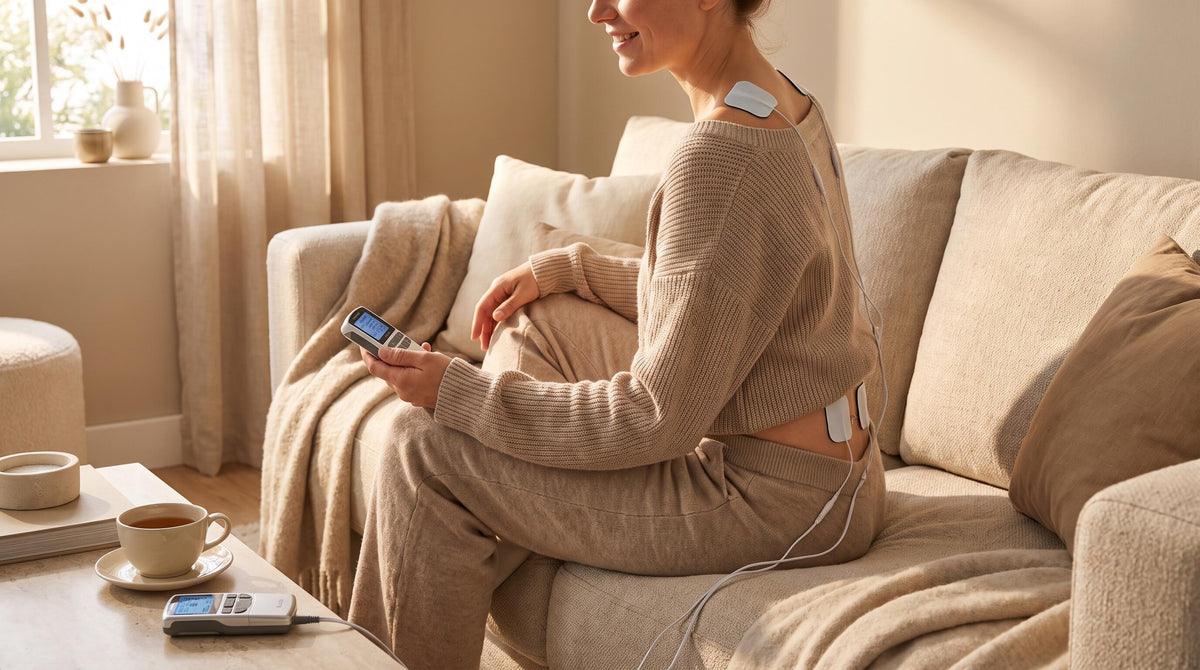
ALT: Adult using TENS EMS combo device at home for physical therapy support and drug-free pain relief
Why TENS EMS Physical Therapy Support at Home Is Changing Pain Management
Key Conclusion: Combining TENS EMS physical therapy support into a single at-home device gives everyday users access to clinical-quality pain relief and muscle rehabilitation without repeated clinic visits. This dual-function approach addresses both the sensory pain pathways (via TENS) and the motor muscle pathways (via EMS), making it one of the most versatile and cost-effective tools available for ongoing home therapy routines.
The demand for drug-free, at-home healthcare solutions has accelerated dramatically in recent years. Whether you're managing post-surgical recovery, dealing with persistent lower back pain, or trying to rebuild muscle strength after an injury, the gap between clinical care and what you can do at home has never felt more urgent — or more bridgeable.
Here's the good news: a quality TENS/EMS combo unit is no longer just for physical therapy clinics. With professional-grade devices now accessible for home use, you can build a consistent, effective home therapy routine that mirrors what your physical therapist might prescribe. The key is knowing what to look for, how to use these devices correctly, and which approach suits your specific condition.
Who Should Consider a TENS EMS Combo for Home Physical Therapy
✅ Applicable Scenarios:
- Adults managing chronic pain conditions such as lower back pain, arthritis, sciatica, or neck and shoulder tension who want a non-pharmacological daily management strategy
- Post-rehabilitation patients who have been discharged from formal physical therapy but need to continue muscle strengthening or pain control at home
- Fitness enthusiasts and athletes using EMS for accelerated muscle recovery, delayed-onset muscle soreness (DOMS) reduction, or performance support between training sessions
- Seniors seeking gentle, drug-free pain management tools that reduce reliance on over-the-counter analgesics
- Women addressing pelvic floor weakness or recovery following childbirth, when using a device with appropriate pelvic therapy programs
❌ Not Applicable/Cautions:
- Individuals with implanted electronic devices such as pacemakers or neurostimulators — electrical stimulation can interfere with these devices and must be avoided without explicit physician clearance
- People with active cancer, deep vein thrombosis, open wounds, or skin infections in the treatment area — electrical stimulation should not be applied over compromised tissue or areas of undiagnosed pain without a professional evaluation
- Pregnant individuals should avoid TENS/EMS use over the abdomen or lower back without direct guidance from a qualified healthcare provider
- Those who have never used electrical stimulation before should begin with the lowest intensity settings and ideally receive initial guidance from a physical therapist or physician
Understanding Why TENS and EMS Work Better Together for Home Physical Therapy
Physical therapy has long relied on two foundational pillars: pain modulation and muscle rehabilitation. Traditionally, these required separate tools, separate sessions, and often, separate practitioners. TENS (Transcutaneous Electrical Nerve Stimulation) targets the sensory nervous system to interrupt pain signals before they reach the brain — a process explained by the well-established Gate Control Theory of pain. EMS (Electrical Muscle Stimulation), on the other hand, works by delivering electrical impulses that cause muscles to contract, simulating the effects of active exercise and supporting strength rebuilding.
When these two modalities are combined in a single device, users gain a remarkably comprehensive tool. TENS is particularly effective for acute and chronic pain management — studies have shown it to be beneficial for musculoskeletal pain, postoperative discomfort, and neuropathic pain conditions. EMS, meanwhile, is trusted by sports medicine professionals and physical therapists for muscle re-education after injury, counteracting atrophy during periods of reduced activity, and enhancing circulation in recovering tissues.
The growing interest in home-based physical therapy reflects a broader healthcare shift. According to the American Physical Therapy Association, patients increasingly seek self-management strategies that complement formal care. The rise of telehealth has further normalized the concept of patients managing their conditions at home with appropriate guidance and tools. In this environment, a reliable TENS/EMS combo device becomes less of a luxury and more of a practical health investment.
One concern many users raise is whether home devices can truly replicate clinical-grade outcomes. The honest answer is nuanced: a home device won't replace a skilled physical therapist's hands-on assessment, manual therapy, or exercise prescription. However, for adjunct pain management, maintenance therapy, and muscle recovery support, a well-designed TENS/EMS unit delivers meaningful, evidence-backed benefits. The critical factor is device quality — and this is where brands like iStim distinguish themselves.
If you're still weighing whether a combo unit is right for you versus a standalone TENS or EMS device, this guide on Best TENS EMS Combo Machine for Home Use offers an excellent foundation for your research. Understanding the core differences between device types will help you make a far more informed purchase decision and ensure the tool you bring home is genuinely matched to your therapeutic goals.
How to Use a TENS EMS Combo for Physical Therapy Support at Home
Getting Started: A Three-Step Quick Start for Home Therapy Routines
Step 1: Identify Your Treatment Goal and Select the Right Mode
Before powering on the device, take a moment to clarify what you need from this session: are you managing pain, or are you focused on muscle strengthening and recovery? Most professional TENS/EMS combo units offer distinct program modes for each purpose. TENS modes typically include settings for acute pain, chronic pain, and nerve-related discomfort. EMS modes focus on muscle stimulation and may include recovery, strengthening, and massage functions. Choosing the correct mode ensures you're delivering the right type of electrical signal to the right neural or muscular target. Allow approximately 2–3 minutes to review the mode options and select appropriately.
Step 2: Prepare and Place Your Electrode Pads Correctly
Proper electrode placement is one of the most important — and most commonly overlooked — aspects of effective home therapy. Clean and dry the skin thoroughly before applying pads; oils, lotions, or moisture reduce conductivity and adhesion. For TENS pain relief, electrodes are generally placed around the painful area — not directly over bony prominences or open skin. For EMS muscle stimulation, pads should be positioned on the muscle belly, aligned with the motor points for optimal contraction. Most iStim devices come with clear placement guides and high-quality electrode pads designed to maintain adhesion through multiple sessions. Take 5–7 minutes to position pads carefully before beginning.
Step 3: Begin at Low Intensity and Progress Gradually
Always start your session at the lowest intensity setting and gradually increase until you feel a comfortable, strong-but-not-painful sensation. For TENS, the target sensation is a gentle tingling or buzzing that effectively distracts from pain without discomfort. For EMS, you should feel a visible muscle contraction — rhythmic and controlled, never cramping or painful. Most therapeutic sessions last between 20 and 30 minutes, depending on your condition and device settings. After each session, remove pads carefully, allow the skin to breathe, and store pads on their protective film to preserve adhesion for future use.
Comparing Your Options: TENS Only, EMS Only, or TENS EMS Combo
When you're investing in home physical therapy equipment, it's natural to wonder whether a combo unit is truly better than a dedicated single-function device. The answer depends heavily on your specific therapeutic needs — and your budget.
| Comparison Dimension | TENS Only Device | EMS Only Device | TENS EMS Combo |
|---|---|---|---|
| Primary Function | Sensory pain relief via nerve signal modulation | Motor muscle stimulation and strengthening | Both pain relief and muscle rehabilitation |
| Best For | Chronic or acute pain management without muscle rehab needs | Athletes, post-injury muscle recovery, muscle atrophy prevention | Multi-condition users: pain + muscle weakness or recovery |
| Home Therapy Versatility | Moderate — limited to pain management sessions | Moderate — limited to muscle training programs | High — addresses both pain and rehabilitation goals in one device |
| Cost Efficiency | Lower upfront cost; single purpose | Lower upfront cost; single purpose | Higher value per dollar for users needing both modalities |
| Electrode Channels | Typically 2–4 channels | Typically 2–4 channels | Up to 4 channels in professional-grade units — see why channels matter below |
| Who Recommends It | Physical therapists for pain management | Sports medicine, orthopedic rehabilitation | Physical therapists managing complex cases with pain and muscle components |
For users dealing with conditions that combine pain and muscle dysfunction — such as lower back pain with associated muscle weakness, knee osteoarthritis with quadriceps atrophy, or post-surgical recovery — a combo unit is almost always the more clinically logical choice. If you're curious about how channel count affects therapeutic outcomes, this detailed breakdown on Best 4 Channel TENS Unit: Why Channels Matter explains exactly why having more electrode channels gives you more precise and effective treatment coverage.
Deep Dive: Choosing the Best TENS EMS Combo for Your Physical Therapy Goals
What Makes a TENS EMS Device Truly "Physical Therapy Grade"?
When physical therapists use electrical stimulation in a clinical setting, they rely on devices with precise waveform control, consistent output, and enough program variety to tailor treatment to individual patients. The best home-use TENS/EMS combos translate these professional standards into an accessible format without sacrificing therapeutic efficacy.
iStim has built its product line around exactly this principle. As a Los Angeles-based brand with ISO-certified Taiwanese manufacturing, iStim devices are engineered to meet professional-grade standards — meaning the electrical waveforms, intensity ranges, and program protocols reflect what clinicians actually use, not simplified consumer approximations.
A device worth recommending for home physical therapy support should include: multiple pre-programmed therapy modes covering both TENS and EMS applications, adjustable intensity with fine-grained control to accommodate different pain thresholds and muscle sizes, multi-channel output to treat larger or multiple body areas simultaneously, and high-quality electrode pads that maintain consistent contact and conductivity.
Addressing Common Conditions with a TENS EMS Combo
Lower Back Pain and Muscle Tightness: One of the most common applications for home TENS/EMS therapy. TENS is used to reduce the pain signal during flare-ups, while EMS can target the lumbar stabilizing muscles to improve strength and reduce recurrence. Electrode placement near the paraspinal muscles, combined with low-frequency EMS programs, can provide meaningful functional improvement over time.
Knee Pain and Quadriceps Rehabilitation: Post-ACL reconstruction, after knee replacement surgery, or in managing osteoarthritis, the quadriceps muscle frequently atrophies. EMS applied to the quadriceps helps counteract this atrophy and maintain or rebuild strength, while TENS over the knee joint provides symptomatic pain relief during the process. To explore the specific application of TENS for knee pain, this comprehensive guide on knee pain management routines provides practical, condition-specific guidance.
Shoulder Tension and Rotator Cuff Recovery: The shoulder complex is a frequent site of chronic tension, post-injury pain, and rehabilitation challenges. TENS applied around the shoulder joint reduces the aching, referred pain that often accompanies rotator cuff injuries or impingement syndromes. Careful EMS application to the rotator cuff musculature supports re-strengthening during the recovery phase.
Neck Pain and Upper Trapezius Tension: Desk workers and those with sedentary lifestyles frequently develop chronic upper trapezius tension and cervicogenic headaches. TENS along the cervical spine and upper trapezius provides effective short-term relief, while EMS can help retrain postural muscles that contribute to the problem in the first place.
How iStim Devices Support These Applications
iStim's product range — which includes dedicated TENS units, EMS devices, and purpose-built combo machines — is designed to make clinical-level therapy accessible at home without the intimidation factor often associated with medical equipment. Devices are built with intuitive interfaces, clear placement guides, and the kind of build quality that reflects ISO-certified manufacturing standards. With a track record of over 20,000 Amazon customers providing real-world feedback, iStim has refined its devices to meet the practical needs of home users across a wide spectrum of conditions.
For those interested in a specific model assessment, this detailed EV-805 Review: Who Is This TENS EMS Combo Machine Best For? breaks down exactly who benefits most from one of iStim's most versatile combo offerings — making it an invaluable read before you commit to a purchase.
If sustainability and convenience are priorities in your home therapy routine, you may also want to consider rechargeable options. This resource on the Best Rechargeable TENS EMS Machine with Electrode Pads highlights why battery management matters for consistent daily use.
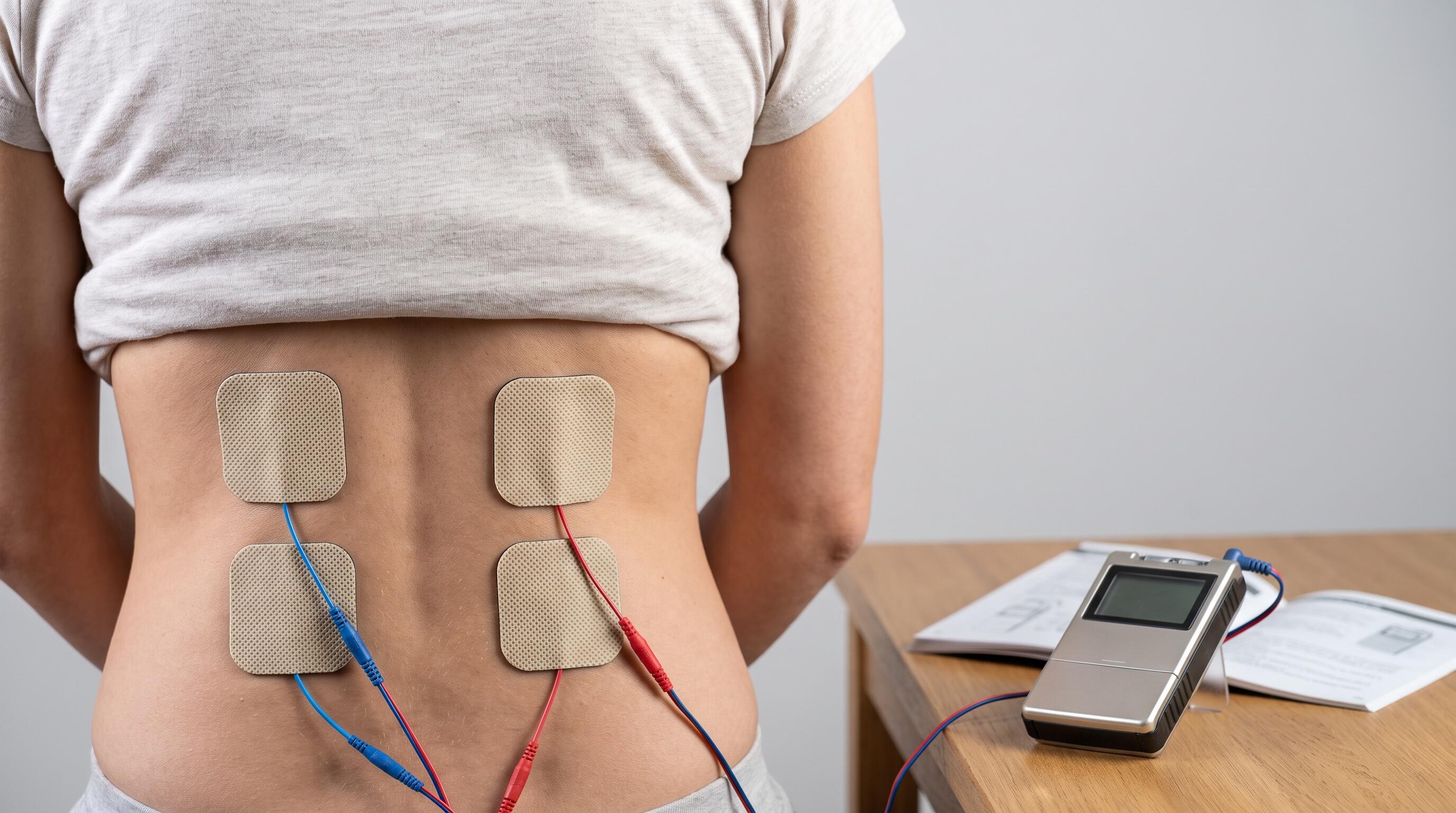
ALT: Demonstrating correct electrode pad placement on lower back for home TENS EMS physical therapy support session
Advanced Considerations: Getting the Most from Your Home Physical Therapy Routine
Special Situations That Require Extra Attention
When Pain Increases After Use: A mild increase in muscle soreness following EMS is normal, particularly in the first few sessions — this mirrors the experience of returning to exercise after a period of inactivity. However, if TENS application causes sharp, burning, or worsening pain, this is a signal to stop immediately and consult a healthcare professional. Correctly placed pads and appropriate intensity levels should feel therapeutic, not painful.
Frequency and Duration of Sessions: One of the most common questions home users have is how often they should use their TENS/EMS device. For pain management with TENS, daily sessions are generally well tolerated, with many users finding relief in sessions of 20–30 minutes. EMS for muscle strengthening should typically be used with rest days in between to allow muscle recovery — similar to a resistance training schedule. Always follow the guidance provided in your device manual and, where possible, coordinate your home therapy routine with the recommendations of your physical therapist.
Electrode Pad Maintenance: The quality and condition of your electrode pads directly affects therapeutic outcomes. Worn or dried-out pads deliver inconsistent electrical contact, leading to uneven stimulation and reduced efficacy. Store pads on their protective backing after each use, keep them at room temperature, and replace them when adhesion noticeably declines. Using pads designed specifically for your iStim device ensures optimal conductivity and skin safety.
Common Misconceptions Clarified
"More intensity equals better results": This is one of the most persistent myths in home electrotherapy. Higher intensity does not translate to better pain relief or stronger muscle outcomes — it simply increases the risk of skin irritation and discomfort. The optimal therapeutic window is strong-but-comfortable, not maximum tolerable.
"TENS and EMS are the same thing": While both use electrical stimulation, they operate through entirely different mechanisms. TENS modulates pain signals in the sensory nervous system; EMS stimulates motor neurons to produce muscle contractions. Confusing them leads to incorrect application and missed therapeutic opportunities. For a thorough comparison, the iStim article on TENS vs EMS: Which Device Should You Choose? is an excellent clarifying resource.
"Home devices are just toys compared to clinical ones": Quality matters enormously — and it's precisely why choosing a brand like iStim, with ISO-certified manufacturing and a clinically grounded product philosophy, makes such a difference. Professional-grade home devices are not the same as generic low-cost options, and the distinction is reflected in both build quality and therapeutic outcomes.
Frequently Asked Questions FAQ
Q1: How do I know which TENS EMS combo is good for home physical therapy support?
Look for a device that offers both TENS and EMS modes with clearly differentiated programs, at least two channels for simultaneous electrode placement, adjustable intensity with fine control, and a reliable build quality backed by reputable manufacturing standards. iStim's combo devices are specifically designed to meet these criteria, offering professional-grade output in a home-friendly format. Reading verified user reviews and checking whether the brand provides clinical-quality specifications — rather than vague marketing claims — is the best first step.
Q2: Is it safe to use a TENS EMS combo device every day at home?
For most healthy adults without contraindications, daily TENS use for pain management is generally considered safe. EMS, however, involves active muscle contraction and should be approached like exercise — meaning rest days are beneficial for muscle recovery. Always begin with shorter sessions at lower intensity to assess your body's response. If you have any underlying medical conditions, are post-surgical, or are taking medications that affect circulation or nerve sensitivity, consult your healthcare provider before beginning a daily home therapy routine.
Q3: How long does it take to notice results from home TENS EMS physical therapy support?
Results vary significantly depending on the condition being treated and consistency of use. Many users report meaningful pain relief within the first few TENS sessions — sometimes within a single treatment. EMS-based muscle strengthening and rehabilitation typically requires consistent use over several weeks before functional strength improvements become noticeable, similar to a physical exercise program. Setting realistic expectations and maintaining a consistent home therapy schedule — ideally complementing any formal physical therapy you may be receiving — is the most effective approach.
Summary
Building an effective home physical therapy routine around a quality TENS EMS combo device is one of the most practical and evidence-supported steps you can take toward managing chronic pain and supporting muscle recovery without relying on medications or constant clinic visits.
Three core takeaways from this guide:
- Dual modality matters: TENS and EMS address fundamentally different aspects of physical rehabilitation — pain modulation and muscle function, respectively. A combo device gives you both tools in a single, convenient unit, making your home therapy routine more complete and adaptable to changing needs.
- Device quality is non-negotiable: Not all home electrotherapy devices are created equal. Professional-grade manufacturing, precise waveform delivery, and thoughtfully designed programs are what separate therapeutic tools from consumer novelties. iStim's ISO-certified devices represent exactly this standard.
- Consistency and correct technique drive outcomes: Even the best device requires proper electrode placement, appropriate mode selection, and regular use to deliver meaningful results. Taking the time to learn your device, start conservatively, and build a consistent routine will produce far better outcomes than sporadic, high-intensity sessions.
Your next step is simple: assess your specific pain management or rehabilitation needs, explore the iStim product range to find the device that fits those needs, and commit to a structured home therapy routine that complements any professional care you're receiving.
Ready to experience drug-free pain relief and muscle stimulation from the comfort of your home? Visit iStim at https://istim.com/ to explore their full range of professional-grade TENS, EMS, and Kegel devices — trusted by over 20,000 customers and built to clinical standards. Whether you're managing chronic pain, speeding up muscle recovery, or strengthening your pelvic floor, iStim has a solution designed for you.
References
- American Physical Therapy Association. "Physical Therapy Guide to Self-Management".
https://www.apta.org/ - National Institutes of Health — National Center for Complementary and Integrative Health. "Chronic Pain: What You Need To Know".
https://www.nccih.nih.gov/health/chronic-pain-what-you-need-to-know - Johnson MI. "Transcutaneous Electrical Nerve Stimulation (TENS): Research to Support Clinical Practice". Oxford University Press, 2014. Referenced via Oxford Academic.
https://academic.oup.com/ptj - Maffiuletti NA. "Physiological and methodological considerations for the use of neuromuscular electrical stimulation." European Journal of Applied Physiology, 2010.
https://pubmed.ncbi.nlm.nih.gov/20473619/ - MedlinePlus — U.S. National Library of Medicine. "Electrical Stimulation for Pain Relief".
https://medlineplus.gov/
Note: Standards and clinical guidelines may be updated periodically. Please consult the latest official documents or speak with a qualified healthcare professional for the most current recommendations.
About iStim
iStim is a Los Angeles-based electrotherapy brand specializing in professional-grade TENS, EMS, and Kegel devices engineered for safe and effective home use, backed by ISO-certified Taiwanese manufacturing and the trust of 20,000+ Amazon customers. Learn more at https://istim.com/.
Disclaimer: This article is provided for informational and educational purposes only and does not constitute medical advice. The content is produced in partnership with iStim and reflects the brand's expertise in electrotherapy and drug-free wellness solutions. Always consult a qualified healthcare professional before starting any new treatment or therapy program.