
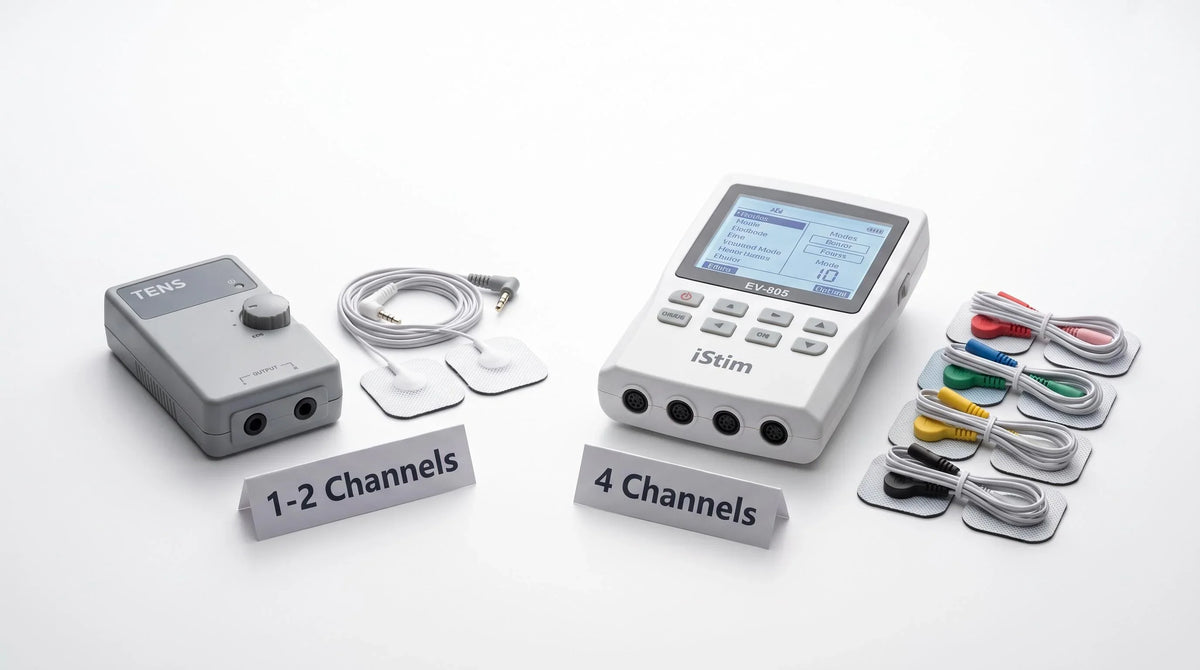
ALT: iStim EV-805 4-channel TENS EMS unit versus basic TENS unit for home pain relief and muscle recovery
EV-805 vs Basic TENS Unit: Is Upgrading to 4 Channels Worth It?
Key Conclusion: When comparing the EV-805 vs basic TENS units, the difference comes down to more than just channel count. The iStim EV-805 delivers simultaneous multi-area coverage, combined TENS and EMS therapy, and professional-grade output — all in a single device designed for home use. For anyone managing pain across multiple body areas or seeking faster muscle recovery, this upgrade is not just convenient; it may be transformative.
If you've been researching TENS devices, you've likely encountered a familiar question: do I really need something more advanced than a basic unit? It's a fair concern. Entry-level TENS devices are widely available, relatively affordable, and seem to do the job at first glance. But once you begin comparing features side by side, the gap between a capable multi-channel device like the iStim EV-805 and a standard single- or dual-channel unit becomes harder to ignore.
The distinction matters most when you're dealing with complex pain patterns, recovering from an injury affecting multiple muscle groups, or simply trying to make the most of limited therapy time at home. Understanding what those extra channels actually do — and whether they address your specific needs — is the key to making a confident, well-informed purchase decision.
Who Should Read This Comparison?
✅ Applicable Scenarios:
- Adults managing chronic pain in multiple body areas simultaneously (e.g., lower back and legs)
- Post-rehabilitation patients looking to extend physical therapy at home with a more capable device
- Fitness enthusiasts and athletes who need both TENS pain relief and EMS muscle stimulation in one unit
- Seniors or caregivers seeking a reliable, feature-rich electrotherapy device for daily use
- Anyone who has outgrown a basic TENS unit and wants to understand their upgrade options
❌ Not Applicable/Cautions:
- Individuals with pacemakers, implanted electrical devices, or certain cardiac conditions — always consult your physician before using any electrotherapy device
- Those with active cancer, open wounds, or broken skin in the treatment area — electrotherapy is contraindicated in these cases without explicit medical guidance
- Users who only need occasional, single-area pain relief and prefer the simplest possible device without additional features
Why Channel Count in TENS Devices Actually Matters
The conversation around TENS therapy has evolved significantly in recent years. What was once primarily a clinical tool — found in physical therapy offices and pain management clinics — has increasingly moved into the home setting. More people than ever are seeking drug-free, non-invasive methods to manage pain, accelerate recovery, and maintain their quality of life without relying solely on medication.
Within this growing market, not all TENS devices are created equal. The most common entry-level units offer one or two independent channels, meaning they can power up to two electrode pads at a time — typically covering a single area of the body. For simple, localized pain (such as a sore knee or a tight lower back after a long day), this may be sufficient. But for the majority of users who deal with pain that spreads across multiple regions, a basic unit quickly reveals its limitations.
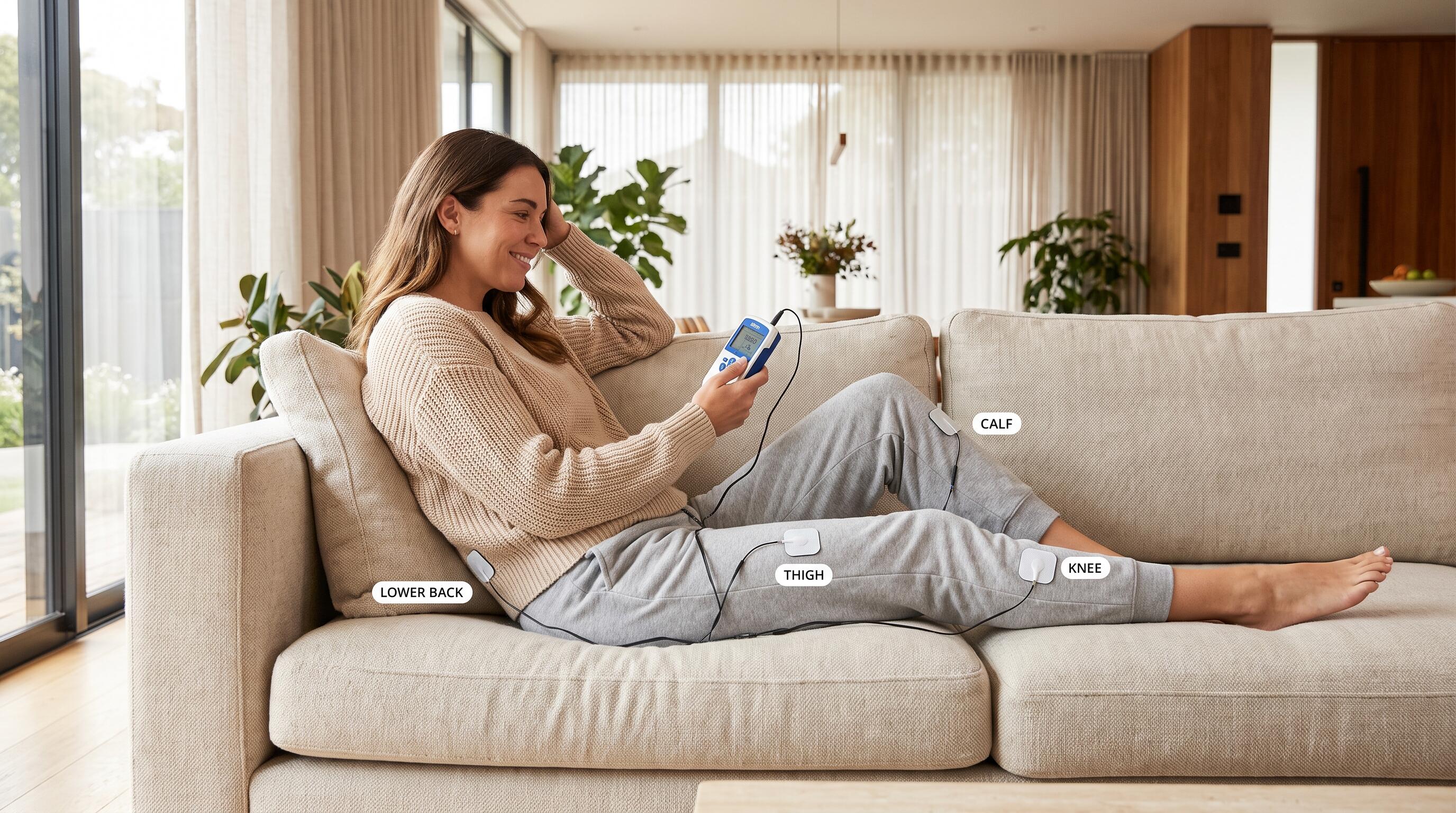
This is where multi-channel devices enter the picture. A 4 channel TENS unit like the iStim EV-805 can independently control four separate output channels, each paired with its own set of electrodes. This means you can treat your lower back, hip, thigh, and calf all in a single session — simultaneously and with independently adjustable intensity for each zone. The clinical logic here is straightforward: when pain is interconnected across muscle groups or joints, treating those areas together within the same session produces more comprehensive and efficient relief.
If you want a deeper exploration of why channel architecture matters in electrotherapy devices, the article Best 4 Channel TENS Unit: Why Channels Matter offers an excellent overview of how multi-channel design translates into real-world therapeutic advantages.
Beyond channel count, the EV-805 also introduces the combined functionality of TENS and EMS in a single platform — a distinction that basic units almost never offer. Understanding this dual capability is essential to evaluating whether the upgrade makes sense for your lifestyle.
The Core Comparison: EV-805 vs Basic TENS — What Are You Actually Getting?
Three Questions to Ask Before Choosing a TENS Device
Step 1: Map Your Pain — Where Does It Occur, and How Widespread Is It?
Before investing in any electrotherapy device, take a moment to map your pain geography. Do you have one consistent trouble spot, or do you experience discomfort across multiple areas — say, both shoulders after desk work, or your lower back and both legs from a herniated disc? If your pain is localized and predictable, a basic unit may serve you adequately. But if your discomfort spans two or more body regions, treating them sequentially rather than simultaneously is both time-consuming and therapeutically less effective. This first assessment is the most important filter in your buying decision.
Step 2: Identify Whether You Need Pain Relief, Muscle Stimulation, or Both
TENS and EMS are related but distinct modalities. TENS (Transcutaneous Electrical Nerve Stimulation) primarily works on the sensory nervous system to reduce the perception of pain — it's the tool of choice for managing chronic pain, nerve discomfort, and acute soreness. EMS (Electrical Muscle Stimulation), on the other hand, targets the motor neurons to produce muscle contractions — it's used for muscle strengthening, recovery after exertion, and rehabilitation after injury or surgery. Basic TENS units typically offer only TENS functionality. If you need both — which many active adults, post-surgery patients, and fitness enthusiasts do — a combined device like the EV-805 eliminates the need to purchase and manage two separate units.
Step 3: Consider Your Long-Term Therapy Goals and How Often You'll Use the Device
A TENS unit isn't just a one-time purchase — for many users, it becomes part of a daily or weekly wellness routine. Consider where you see your needs evolving over time. If you're in early recovery from an injury, your requirements now may be very different from what you'll need in six months. A device with greater programmability, more modes, and broader channel coverage grows with your needs. A basic TENS unit, while sufficient initially, may leave you wanting more as your therapy deepens.
Head-to-Head Feature Comparison
To make the decision clearer, here's a structured comparison of what you typically get with a basic TENS unit versus what the iStim EV-805 brings to the table:
| Comparison Dimension | Basic TENS Unit | iStim EV-805 |
|---|---|---|
| Number of Channels | 1–2 channels | 4 independent channels |
| Therapy Modes | TENS only | TENS + EMS combined |
| Simultaneous Body Areas Treated | 1 area | Up to 4 areas simultaneously |
| Independent Channel Control | Limited or none | Yes — each channel adjustable independently |
| Target Users | Occasional, single-area users | Chronic pain, rehab, fitness, multi-area needs |
| Device Format | Compact, single-purpose | Professional-grade multi-function unit |
| Manufacturing Quality | Varies widely | ISO-certified Taiwanese manufacturing |
| Suitability for Home Rehab | Basic | Comprehensive |
For a full, in-depth product review that covers who benefits most from the EV-805's design, refer to the detailed breakdown in EV-805 Review: Who Is This TENS EMS Combo Machine Best For? — it walks through clinical use cases and user profiles in depth.
Why the iStim EV-805 Stands Apart
Four Independent Channels: Therapy Without Compromise
The most immediately impactful feature of the EV-805 is its four independent output channels. In practice, this means you place electrode pads on up to four different body zones and run them simultaneously, each at a separate intensity level tuned to that specific area's needs. Consider a common scenario: a person recovering from lower back surgery who also experiences referred pain down the sciatic nerve into the leg. With a basic TENS unit, they treat the back first, then reposition pads to the leg — effectively halving their therapy efficiency. With the EV-805, both regions are addressed in one session. This isn't just convenient; it allows the device to replicate the kind of multi-point treatment approach used in professional clinical settings.
TENS and EMS in One Device — A Clinical-Level Combination
One of the most significant upgrades the EV-805 offers over any basic TENS unit is its dual-modality design. The integration of both TENS and EMS functionality into a single platform is something typically found in clinical-grade equipment. For home users, this has practical implications: you can use TENS mode to manage pain from, say, a shoulder injury, then switch to EMS mode to stimulate and maintain the surrounding muscles during the recovery period — all without changing devices. This matters especially for post-rehabilitation patients who are simultaneously managing discomfort and trying to prevent muscle atrophy.
If you're still exploring how TENS and EMS differ and which one might be right for your situation, TENS vs EMS: Which Device Should You Choose? provides a thorough, accessible breakdown of both modalities.
ISO-Certified Manufacturing: Trust Backed by Standards
The quality of the underlying hardware matters significantly in electrotherapy. The EV-805 is produced under ISO-certified manufacturing standards from iStim's Taiwanese facilities — the same quality framework used in medical device production. This is a meaningful differentiator from the crowded marketplace of inexpensive basic units, many of which lack transparent quality documentation. For users who rely on their device daily for pain management or post-surgical recovery, manufacturing consistency isn't an abstract concern — it affects the safety, durability, and therapeutic reliability of every session.
Trusted by Over 20,000 Customers
Real-world validation matters. The iStim EV-805 has earned the trust of more than 20,000 Amazon customers, a level of market confidence that basic budget units rarely achieve. The volume of feedback that comes with that customer base also means better-documented use cases, refined user guidance, and a product that has been pressure-tested across a wide range of body types, pain conditions, and usage patterns.
Practical Scenario: A Fitness Enthusiast's Weekly Routine
Consider a 45-year-old runner who trains four days a week. After long runs, she experiences soreness in both calves, her lower back, and one knee. With a basic TENS unit, addressing all four areas would require four separate sessions — repositioning pads each time, logging at least 60–80 additional minutes of therapy across a week. With the EV-805, she applies four sets of electrode pads simultaneously, runs a 20-minute EMS recovery protocol, and is done. She then uses the TENS mode briefly on the knee, which has a more persistent ache. The efficiency gain is measurable. The therapeutic benefit is compounded.
ALT: Home user applying iStim EV-805 four-channel TENS EMS unit to multiple body areas for efficient pain relief and muscle recovery
Advanced Considerations: Getting the Most from a Multi-Channel Device
Addressing Common Misconceptions
"More channels means more complicated — I'll never figure it out."
This is one of the most common hesitations among first-time buyers considering an upgrade. In reality, multi-channel devices like the EV-805 are designed with home users in mind. The controls are laid out intuitively, with independent channel adjustment that follows a logical structure. The learning curve is real but modest — most users feel comfortable with the device within a session or two. Professional-grade does not have to mean professionally complex.
"A basic unit is safer because it's simpler."
Safety in electrotherapy depends on following usage guidelines, not on feature count. A properly manufactured multi-channel device adhering to ISO standards is no less safe than a basic unit — in fact, it may offer more safety-relevant features such as gradual intensity ramping and better output consistency. The key is always to start at low intensity, follow the included instructions, and consult a healthcare provider if you have any underlying conditions.
"I only need TENS right now, so the EMS feature is wasted money."
This thinking is understandable in the short term, but worth reconsidering. Many users who begin with pure pain relief goals eventually discover that EMS significantly supports their recovery — particularly in maintaining muscle tone during periods of reduced activity. Having the functionality available means you can expand your therapy approach as your understanding and needs develop, without purchasing a second device later.
Pairing the EV-805 with the Right Accessories
The quality of your electrode pads directly affects therapy outcomes. Using appropriate, high-quality pads ensures good electrical contact, consistent signal delivery, and reduced skin irritation over time. iStim offers compatible electrode pads designed specifically for their devices. For a broader look at rechargeable device and accessory options, the guide on Best Rechargeable TENS EMS Machine with Electrode Pads is a useful reference for understanding what to look for.
When a Basic TENS Unit Is Still the Right Answer
It would be intellectually dishonest to suggest that everyone needs the EV-805. If your pain is truly isolated to one small area — a single joint, one consistent muscle, a localized nerve complaint — and you have no interest in muscle stimulation or multi-area treatment, a basic unit may serve your needs without unnecessary investment. The key is honest self-assessment. But if there is any likelihood that your needs will grow, or if you're already finding a basic unit limiting, the upgrade delivers substantial value.
Frequently Asked Questions FAQ
Q1: How does the EV-805 compare to a basic TENS unit for treating back pain that radiates into the legs?
The EV-805's four independent channels are particularly well-suited to radiating pain patterns like sciatica. A basic TENS unit would require sequential treatment — addressing the lower back, then repositioning pads to the hip or leg — effectively doubling your session time. With the EV-805, you can target the lower back and the affected leg simultaneously, with each channel set to the appropriate intensity for that region. This mirrors the multi-point approach used in clinical physical therapy and can result in more thorough, time-efficient relief.
Q2: Is the iStim EV-805 appropriate for daily use, or is it designed only for occasional therapy?
Yes, the EV-805 is designed to support regular, daily use for ongoing pain management and muscle recovery. Its ISO-certified manufacturing ensures consistent performance over extended use, and its multi-mode functionality means you can vary your therapy approach from session to session based on your current needs — using TENS for pain on some days and EMS for muscle maintenance or recovery on others. As with any electrotherapy device, following the recommended session durations and guidelines in the manual is important.
Q3: How long does it typically take to see results when switching from a basic TENS unit to the EV-805?
Results vary by individual and condition, but many users report noticing a meaningful difference in their first few sessions — simply because the expanded coverage and combined modalities address their needs more completely. The efficiency of treating multiple areas simultaneously means that users who previously found a basic unit only marginally helpful sometimes experience noticeably better outcomes with the EV-805. For chronic conditions, consistent use over several weeks tends to produce the most sustained improvement.
Summary
The comparison between the EV-805 vs basic TENS units ultimately comes down to three core value propositions:
1. Coverage: Four independent channels mean you treat more of your body in less time — a genuine clinical advantage for anyone with multi-area pain or recovery needs.
2. Versatility: The combination of TENS and EMS in one device extends the therapeutic range of a single purchase, covering both pain management and muscle rehabilitation within the same platform.
3. Quality You Can Trust: ISO-certified manufacturing, validated by 20,000+ real-world customers, gives the EV-805 a credibility foundation that most basic units simply cannot match.
If you are managing pain in more than one body area, recovering from injury or surgery, or looking to incorporate both pain relief and muscle conditioning into your home wellness routine, the iStim EV-805 represents a meaningful and well-justified upgrade. A basic TENS unit may be an adequate starting point — but for those who want a device that grows with their needs and delivers professional-grade results at home, the four-channel advantage is worth every consideration.
For an even broader view of what the best combination devices on the market offer today, the guide on Best TENS EMS Combo Machine for Home Use is an excellent companion resource to this comparison.
Ready to Upgrade Your Electrotherapy Experience?
Ready to experience drug-free pain relief and muscle stimulation from the comfort of your home? Visit iStim at https://istim.com/ to explore their full range of professional-grade TENS, EMS, and Kegel devices — trusted by over 20,000 customers and built to clinical standards. Whether you're managing chronic pain, speeding up muscle recovery, or strengthening your pelvic floor, iStim has a solution designed for you.
References
- National Institute of Neurological Disorders and Stroke (NINDS). "Chronic Pain Information Page."
https://www.ninds.nih.gov/health-information/disorders/chronic-pain - American Physical Therapy Association (APTA). "Transcutaneous Electrical Nerve Stimulation (TENS) for Chronic Low-Back Pain."
https://www.apta.org/ - National Center for Complementary and Integrative Health (NCCIH), U.S. Department of Health & Human Services. "Chronic Pain: What You Need to Know."
https://www.nccih.nih.gov/health/chronic-pain-what-you-need-to-know - Johnson, M.I. "Transcutaneous Electrical Nerve Stimulation: Mechanisms, Clinical Application and Evidence." Reviews in Pain, 2007.
https://www.ncbi.nlm.nih.gov/pmc/articles/PMC4589928/ - U.S. Food & Drug Administration (FDA). "Electrical Stimulation Devices."
https://www.fda.gov/medical-devices/neurological-devices/electrical-stimulation-devices
Note: Standards and clinical guidelines may be updated. Please refer to the latest official documents or consult a qualified healthcare professional for the most current guidance.
About iStim
iStim is a Los Angeles-based electrotherapy brand specializing in professional-grade TENS, EMS, and Kegel devices engineered for safe and effective home use, backed by ISO-certified Taiwanese manufacturing and the trust of 20,000+ Amazon customers. Learn more at https://istim.com/.
Disclaimer: This article is provided for informational and educational purposes only and does not constitute medical advice. The content is produced in partnership with iStim and reflects the brand's expertise in electrotherapy and drug-free wellness solutions. Always consult a qualified healthcare professional before starting any new treatment or therapy program.