
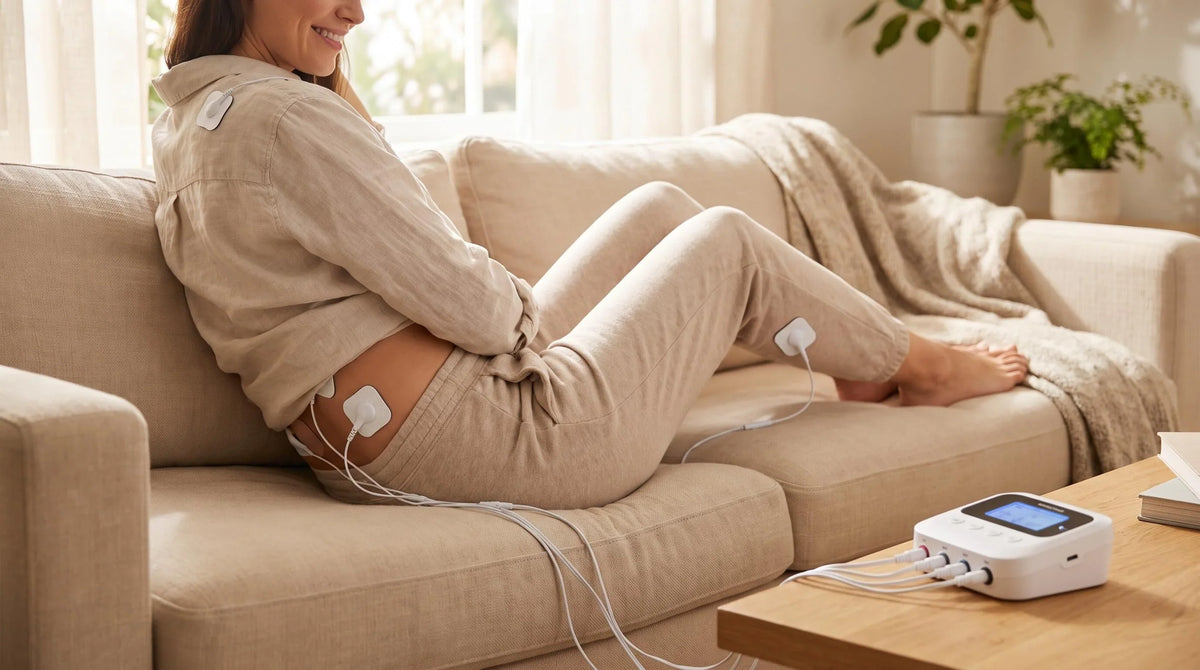
ALT: Person using a multi-area TENS EMS device with electrode pads on back, shoulder, and leg for drug-free pain relief
Why a Multi-Area TENS EMS Device Changes Everything About At-Home Recovery
Key Conclusion: A high-quality multi-area TENS EMS device allows you to address pain and muscle fatigue across several body zones in a single session—without pharmaceuticals, without clinic visits, and without juggling multiple machines. By combining TENS (Transcutaneous Electrical Nerve Stimulation) for pain relief with EMS (Electrical Muscle Stimulation) for muscle activation and recovery, these dual-function units deliver clinically relevant therapy directly to your home. The result is a more efficient, cost-effective, and empowering approach to whole-body wellness.
Managing pain or recovering from physical exertion rarely involves just one muscle or joint. Athletes battle simultaneous soreness in their quads, hamstrings, and lower back after a hard training session. Desk workers carry tension in their neck, shoulders, and mid-back all at once. Postpartum women may experience lower back discomfort while also working to rehabilitate their pelvic floor. The challenge is clear: single-area, single-function devices fall short for people with complex, multi-site needs.
That's why the conversation around electrotherapy has evolved so dramatically. A well-designed TENS EMS combo unit—particularly one built with multiple independent channels—can treat several areas of your body simultaneously or in sequence, delivering both nerve-level pain relief and targeted muscle stimulation. This article walks you through everything you need to know to find the best solution for multi-area use.
Who Should Be Reading This Guide
✅ Applicable Scenarios:
- Athletes and fitness enthusiasts seeking muscle recovery across multiple body zones after training
- Adults with chronic pain conditions (back pain, arthritis, fibromyalgia) affecting more than one area simultaneously
- Postpartum women addressing lower back discomfort, hip tension, and pelvic floor rehabilitation together
- Older adults managing age-related muscle weakness and joint pain across the body
- Office workers dealing with neck, shoulder, and upper-back tension as a combined complaint
- Anyone looking to reduce or eliminate reliance on over-the-counter or prescription pain medications
❌ Not Applicable/Cautions:
- Individuals with implanted electronic devices such as pacemakers or neurostimulators (consult your physician before any electrotherapy use)
- People with active skin infections, open wounds, or rashes in areas where electrode pads would be placed
- Pregnant women should avoid TENS/EMS on the abdomen or lower back without explicit medical guidance
- Those with undiagnosed pain—electrotherapy addresses symptoms; it does not diagnose underlying conditions, and persistent or unexplained pain should be evaluated by a healthcare professional
The Growing Need for Whole-Body Electrotherapy at Home
For decades, TENS and EMS therapy belonged almost exclusively to physical therapy clinics and sports medicine centers. The devices were bulky, expensive, and required professional supervision. Over the past several years, however, advances in miniaturized electronics and ISO-certified manufacturing have made professional-grade devices accessible to everyday consumers at a fraction of the traditional cost.
The shift matters enormously. According to the National Center for Complementary and Integrative Health (NCCIH), chronic pain affects a significant portion of the U.S. adult population, and a growing number of individuals are actively seeking non-pharmaceutical alternatives to manage it. Meanwhile, sports science research has continued to validate EMS as a legitimate tool for muscle activation, fatigue recovery, and even rehabilitation following injury.
What's changed most notably is consumer expectation. People no longer want a device that handles only their knee or only their shoulder—they want a device versatile enough to follow them through an entire wellness routine. This is precisely where the category of multi-area TENS EMS devices earns its relevance.
If you're newer to this technology and want a foundational overview, Best TENS EMS Combo Machine for Home Use is an excellent starting point that covers the essential differences between device types and what to look for before buying.
The market response to this demand has been notable. Combo units featuring dual-mode therapy (TENS + EMS), multiple independent output channels, and pre-programmed treatment modes have proliferated. But not all devices are created equal—and understanding what separates an effective multi-area unit from a mediocre one is the first step toward making a smart, health-forward decision.
How to Get Started with a Multi-Area TENS EMS Device
Quick Start: From Unboxing to First Session in Three Steps
Step 1: Map Your Treatment Areas and Select Electrode Placement
Before powering on your device, take a moment to identify the two to four areas you want to address in your session. Common combinations include lower back + hamstrings, neck/shoulders + upper back, and quad + calf recovery. Refer to the electrode placement guide included with your device—most quality units provide clear anatomical diagrams. Proper pad positioning is essential: pads should sit on the muscle belly or along the nerve pathway for the area being treated, never over bony prominences, the spine itself, or the front of the neck. Correct placement takes about five minutes and makes a significant difference in treatment effectiveness.
Step 2: Set Your Mode and Intensity
Once pads are placed and connected to your device's output channels, power on the unit and select the appropriate therapy mode. TENS modes (often labeled with pulse rate and width settings, or as "pain relief" presets) are ideal for acute or chronic pain. EMS modes (typically labeled as "muscle stimulation," "recovery," or "strength") are better suited for post-workout recovery or muscle activation. Begin at the lowest intensity and increase gradually until you feel a strong but comfortable sensation—never to the point of pain or sharp discomfort. Multi-channel devices allow you to set different intensities for different body zones in the same session, which is a key advantage for whole-body treatment. Allow approximately five to fifteen minutes to dial in your preferred settings.
Step 3: Run Your Session and Monitor Your Response
Most therapeutic sessions run between fifteen and thirty minutes per area, though pre-programmed modes on quality devices may auto-stop at a set time. During your session, relax in a comfortable position and avoid strenuous movement that could dislodge electrode pads. Pay attention to how each treated area feels—mild muscle twitching during EMS is normal; sharp or radiating pain is not. After the session, remove pads carefully, clean the skin with a mild wipe, and store pads on their backing for future use. Note how your body responds over the following hours; this informs how you adjust intensity and frequency for subsequent sessions.
Comparing Multi-Area Device Configurations: What Actually Matters
Choosing the right device comes down to understanding a few core technical and usability dimensions. The table below compares three broad categories of electrotherapy devices to help contextualize what a true multi-area unit offers versus more limited alternatives.
| Comparison Dimension | Single-Channel Basic TENS | Dual-Mode TENS/EMS (2-Channel) | Multi-Channel TENS/EMS (4-Channel) |
|---|---|---|---|
| Areas Treatable Simultaneously | 1 | 1–2 | Up to 4 independent zones |
| Therapy Modes Available | TENS only | TENS + EMS | TENS + EMS, often with multiple presets |
| Channel Independence | N/A | Limited (often mirrored) | Fully independent intensity per channel |
| Ideal User | Single-site acute pain | General home user | Athletes, chronic pain, multi-site recovery |
| Session Efficiency | Low (treat one area at a time) | Moderate | High (full-body treatment in one session) |
| Typical Preset Programs | Few | Moderate | Extensive |
| Professional-Grade Quality | Varies widely | Varies | Available from ISO-certified manufacturers |
As the table illustrates, a 4-channel TENS EMS unit is the defining feature that separates a truly effective multi-area device from its more limited counterparts. Four independent channels mean you can simultaneously place electrode pads on your lower back and both legs, for example, and run different modes or intensities on each zone without interference. For a deeper dive into why channel count is so consequential, Best 4 Channel TENS Unit: Why Channels Matter offers a thorough breakdown of the engineering and clinical rationale behind multi-channel design.
Understanding the Science and Practical Benefits of Dual-Mode Multi-Area Therapy
How TENS and EMS Work Differently—and Why You Need Both
TENS therapy operates by delivering low-voltage electrical pulses through the skin to interrupt or modulate pain signals traveling along sensory nerve fibers. The Gate Control Theory of pain—one of the most well-supported models in pain science—explains how this works: stimulating large-diameter sensory nerves can effectively "close the gate" to pain signals carried by smaller fibers, reducing perceived pain without drugs. TENS is particularly effective for musculoskeletal pain, nerve-related discomfort, and post-surgical pain management under physician guidance.
EMS therapy, by contrast, targets motor nerves and muscle fibers directly. Rather than modulating pain perception, EMS causes muscles to contract rhythmically—mimicking the effect of voluntary exercise. This makes it invaluable for post-workout recovery (flushing lactic acid and reducing soreness), muscle re-education after injury or surgery, and building functional strength in muscles weakened by disuse or age.
The power of a combo device is that you can apply both modalities within the same session across different body regions. For instance, a runner might use TENS on a sore knee while running EMS recovery modes on fatigued quadriceps—simultaneously, through separate channels. This is not possible with single-mode or single-channel devices.
What Makes iStim Devices Stand Out for Multi-Area Use
iStim's professional-grade TENS and EMS devices are engineered with exactly this kind of versatility in mind. Built to ISO-certified manufacturing standards in Taiwan and trusted by over 20,000 Amazon customers, iStim units combine clinical-level functionality with the approachability needed for safe, effective home use.
The iStim lineup includes devices with multiple independent output channels, extensive pre-programmed therapy modes, and intuitive controls that don't require a physical therapy degree to navigate. Whether you're a competitive athlete managing training load, an older adult working to maintain muscle function and manage joint pain, or a postpartum woman rebuilding core and pelvic floor strength, iStim's devices are designed to scale to your specific needs.
For those researching a specific model, the EV-805 Review: Who Is This TENS EMS Combo Machine Best For? provides an in-depth look at one of iStim's most versatile combo units and the user profiles it serves best.
Equally important is the quality of electrode pads—a factor many buyers overlook. High-quality, reusable pads maintain strong adhesion and conductivity across sessions, which directly affects therapy effectiveness. If you're considering rechargeable options with premium electrode pads included, Best Rechargeable TENS EMS Machine with Electrode Pads is a helpful resource for understanding what to expect from the best-in-class options.
Real-World Application: Multi-Area Recovery in Practice
Consider a 45-year-old recreational cyclist dealing with chronic lower back tightness, post-ride quad soreness, and occasional shoulder tension from her riding position. With a basic single-channel TENS unit, she could treat one of these areas per session—meaning a complete daily treatment might take over an hour. With a quality 4-channel TENS EMS device, she can simultaneously apply TENS to her lower back for pain relief, run EMS recovery on both quads through two independent channels, and use a fourth channel on her upper trapezius—all in a single thirty-minute session.
The time savings are significant, but so is the cumulative therapeutic benefit. Addressing multiple areas consistently, rather than rotating through them inefficiently, leads to better outcomes over time.
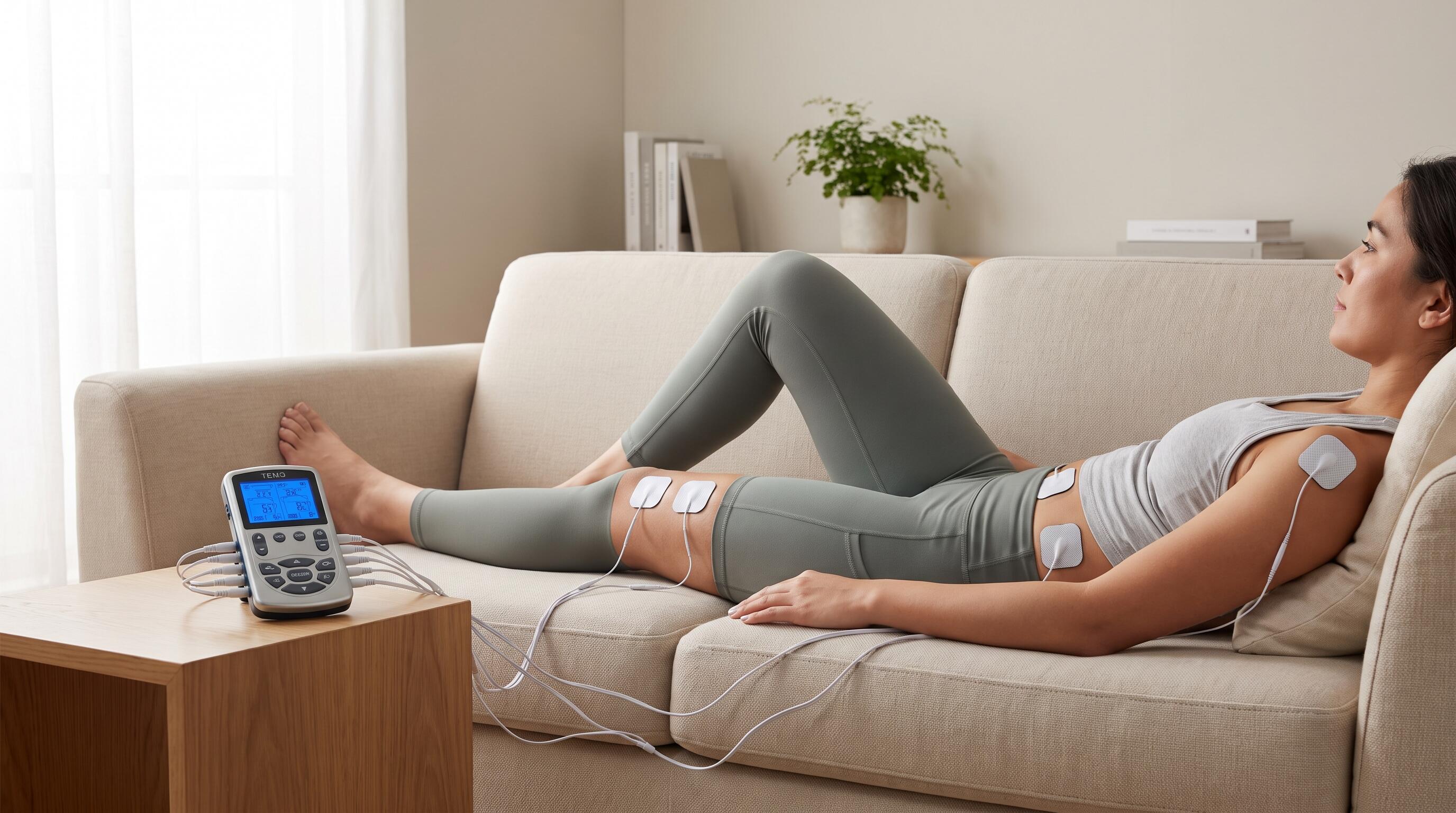
ALT: Multi-area TENS EMS device in use with electrode pads on lower back, quad, and shoulder for simultaneous whole-body pain relief and muscle recovery
Advanced Considerations: Getting More From Your Multi-Area Device
Handling Special Situations and Optimizing Outcomes
Asymmetrical pain or recovery needs are common and easy to address with a multi-channel device. If your left shoulder is more painful than your right, set different intensity levels on each corresponding channel rather than defaulting to a mirrored output. This individualized approach more closely mimics how a trained physical therapist would approach a session.
Frequency and duration optimization is something many users don't think about initially. Research in electrotherapy generally supports daily or near-daily use for chronic conditions, with session length typically in the fifteen-to-thirty-minute range per area. However, more is not always better—especially with EMS, where adequate recovery between muscle-stimulation sessions matters for the same reason rest days matter in exercise programming. A good rule of thumb: alternate between heavy EMS sessions and lighter TENS-focused sessions on consecutive days.
Layering electrotherapy with other modalities amplifies results. Using your TENS EMS device in conjunction with gentle stretching, hydration, and quality sleep creates a more comprehensive recovery environment. Some users find that applying heat to a treatment area for five to ten minutes before a TENS session improves circulation and pad adhesion, while a brief cold therapy application afterward helps manage any residual inflammation.
Common Misconceptions Clarified
One persistent myth is that higher intensity always means better results. In reality, therapeutic electrical stimulation follows a principle of "comfortable but effective"—the goal is to achieve the desired physiological response (pain gate activation or muscle contraction) at the lowest intensity that produces that effect. Chasing maximum intensity can cause skin irritation, discomfort, and diminishing returns.
Another misconception is that TENS and EMS are interchangeable or that any device labeled "electrotherapy" provides both. Many budget devices deliver only one type of stimulation while labeling themselves broadly. Ensuring your device genuinely offers independent, adjustable TENS and EMS modes—not just different intensity levels of the same waveform—is essential for true multi-area therapeutic versatility.
Frequently Asked Questions FAQ
Q1: How do I choose the best TENS EMS device for treating multiple body areas at once?
Look for a device with at least four independent output channels, both genuine TENS and EMS therapy modes, and a clear electrode placement guide. Independent channels allow you to treat different body zones simultaneously with customized settings for each. ISO-certified manufacturing and a track record of user satisfaction (such as iStim's community of 20,000+ Amazon customers) are also reliable quality indicators. For a detailed comparison of channel configurations, visit Best 4 Channel TENS Unit: Why Channels Matter.
Q2: Is it safe to use a TENS EMS device on multiple areas of the body in the same session?
For most healthy adults, yes—using a multi-channel TENS EMS device on several body areas simultaneously is safe when following the manufacturer's guidelines and avoiding contraindicated placements (e.g., over the heart, on the face, or across the spine). Always begin at low intensity and increase gradually. Those with implanted electronic devices, active skin conditions, or specific medical diagnoses should consult a healthcare professional before starting any electrotherapy program.
Q3: How long does it take to see results from regular multi-area TENS EMS therapy?
Timelines vary by individual, condition, and consistency of use. For acute pain relief, many users report noticeable improvement after just one or a few sessions. For chronic pain management and muscle recovery goals, a consistent practice over several weeks tends to yield the most meaningful cumulative results. EMS-based muscle rehabilitation may take longer to produce visible functional improvements, similar to the timeline for physical therapy exercises. Maintaining a regular schedule—rather than sporadic use—is the key variable.
Summary
A well-chosen multi-area TENS EMS device is one of the most versatile and cost-effective investments a health-conscious adult can make for at-home wellness. Three core insights stand out from everything covered in this guide:
1. Channel count defines true multi-area capability. A device with four independent channels is not just an upgrade—it fundamentally changes what's possible in a single session, allowing you to simultaneously address pain and muscle recovery across multiple body zones with individualized settings for each.
2. Dual-mode functionality is non-negotiable for comprehensive care. TENS and EMS serve distinct physiological purposes. A device that genuinely offers both—with independently adjustable modes—gives you a complete therapeutic toolkit rather than a one-dimensional solution.
3. Quality and manufacturing standards matter enormously. Professional-grade devices from ISO-certified manufacturers like iStim deliver consistent, safe, and effective stimulation that budget alternatives often cannot. The trust of over 20,000 Amazon customers reflects real-world outcomes, not just marketing.
Your next step is simple: identify your primary use cases (pain relief, muscle recovery, or both), confirm the body areas you most need to address, and choose a device with the channel count and mode flexibility to meet those needs. Then commit to consistent use—electrotherapy, like most wellness tools, rewards regularity.
Ready to experience drug-free pain relief and muscle wellness from the comfort of your home? Explore iStim's full range of professional-grade TENS, EMS, and Kegel devices at https://istim.com/ and find the right solution tailored to your needs. Join over 20,000 satisfied customers who trust iStim to power their recovery and well-being every day.
References
- National Center for Complementary and Integrative Health (NCCIH). "Chronic Pain: In Depth".
https://www.nccih.nih.gov/health/chronic-pain-in-depth - National Institutes of Health (NIH) — MedlinePlus. "TENS (Transcutaneous Electrical Nerve Stimulation)".
https://medlineplus.gov/ency/article/007473.htm - American Physical Therapy Association (APTA). "Physical Therapy Guide to Chronic Pain".
https://www.choosept.com/guide/physical-therapy-guide-chronic-pain - National Institute of Neurological Disorders and Stroke (NINDS). "Pain: Hope Through Research".
https://www.ninds.nih.gov/health-information/patient-caregiver-education/hope-through-research/pain-hope-through-research - U.S. Food & Drug Administration (FDA). "Electrical Stimulators: TENS (Transcutaneous Electrical Nerve Stimulators)".
https://www.fda.gov/medical-devices/home-use-devices/tens-transcutaneous-electrical-nerve-stimulators
Note: Standards and guidelines may be updated. Please check the latest official documents or consult a qualified healthcare professional for the most current recommendations.
About iStim
iStim is a Los Angeles-based electrotherapy brand specializing in professional-grade TENS, EMS, and Kegel devices for home use, backed by ISO-certified Taiwanese manufacturing and a community of 20,000+ satisfied Amazon customers. Learn more at istim.com.
Disclaimer: This article is provided for informational and educational purposes only and does not constitute medical advice. Always consult a qualified healthcare professional before beginning any new pain management or electrotherapy regimen. © iStim. All rights reserved.