
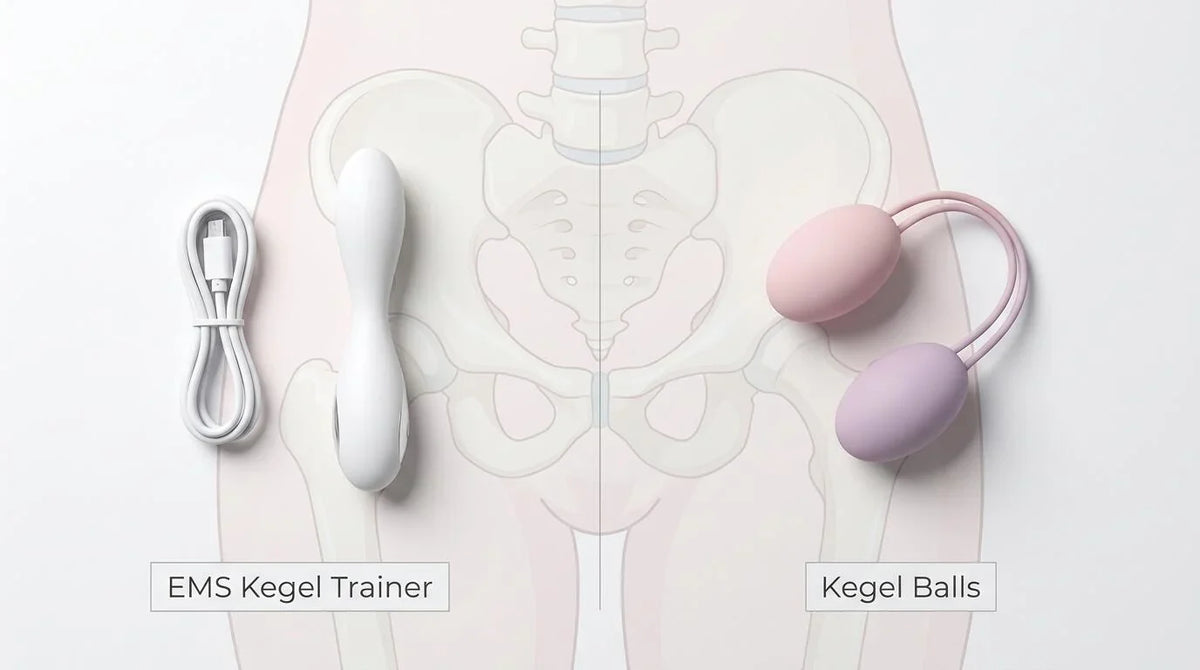
ALT: EMS Kegel trainer vs Kegel balls side-by-side comparison for pelvic floor strengthening and bladder control
EMS Kegel Trainer vs Kegel Balls: Understanding Your Options for Pelvic Floor Health
Key Conclusion: When comparing an EMS Kegel trainer vs Kegel balls, the right choice depends on your specific pelvic floor needs, fitness level, and health goals. EMS Kegel trainers use gentle electrical muscle stimulation to automatically activate and strengthen pelvic floor muscles — ideal for those with significant weakness, postpartum recovery needs, or difficulty performing voluntary contractions. Kegel balls, by contrast, rely on passive resistance and conscious effort, suiting those who already have moderate muscle awareness and control. Understanding these differences is essential to choosing the most effective Kegel device for your wellness journey.
Pelvic floor health is one of the most underaddressed aspects of overall wellness — yet it touches virtually every aspect of daily life, from bladder control and core stability to sexual health and postpartum recovery. Millions of adults, particularly women, experience some degree of pelvic floor dysfunction without ever receiving a clear, actionable path forward. Two of the most widely discussed at-home solutions are EMS-based Kegel trainers and traditional Kegel balls, and understanding how they differ — and which is right for you — can meaningfully change your outcomes. This article breaks down both options with clinical clarity and practical guidance so you can make a confident, informed decision.
Who Should Be Reading This Kegel Device Comparison?
✅ Applicable Scenarios:
- Postpartum women experiencing urinary leakage, pelvic weakness, or reduced muscle tone following childbirth
- Adults aged 35–65 noticing age-related decline in bladder control, core strength, or pelvic floor endurance
- Individuals who have tried traditional Kegel exercises without consistent results and are looking for a more structured or assisted approach
- Athletes and active adults seeking to improve core stability and reduce pelvic floor-related discomfort during physical training
- Wellness-conscious consumers looking for a non-invasive, drug-free alternative to manage pelvic floor dysfunction at home
❌ Not Applicable/Cautions:
- Individuals who are pregnant should consult a healthcare provider before using any internal Kegel device, including EMS trainers or weighted balls
- People with active pelvic infections, pelvic organ prolapse (advanced stages), implanted electronic devices (such as pacemakers), or those who have recently undergone pelvic surgery should seek medical clearance before use
The Growing Need for At-Home Pelvic Floor Solutions
Pelvic floor dysfunction is far more common than most people realize. According to research published by the National Institutes of Health, approximately one in three women will experience some form of pelvic floor disorder in her lifetime — including urinary incontinence, pelvic organ prolapse, or pelvic pain syndromes. Men, too, can experience pelvic floor weakness, particularly following prostate surgery or with age-related muscle decline.
Historically, managing these conditions required frequent visits to a pelvic floor physical therapist — a valuable but often costly and inaccessible option for many individuals. The growing market for at-home Kegel devices has opened new doors, empowering people to take an active role in their own pelvic health without the logistical burden of ongoing clinical appointments.
Two categories of devices have emerged as frontrunners in this space: electrical muscle stimulation (EMS) Kegel trainers, which deliver precisely calibrated electrical impulses to passively stimulate and strengthen the pelvic floor muscles, and Kegel balls (also called Ben Wa balls or weighted vaginal balls), which use physical resistance and body movement to encourage conscious pelvic contractions. The conversation around EMS Kegel trainer vs Kegel balls has become increasingly relevant as consumers weigh efficacy, convenience, and ease of use.
Both approaches are rooted in the same foundational principle — that regular, targeted pelvic floor exercise leads to measurable improvements in muscle tone, bladder control, and quality of life. However, the mechanisms, user requirements, and ideal candidates for each differ significantly. Understanding those differences is the first step toward choosing the right tool for your body and your goals.
Choosing Between EMS Kegel Trainers and Kegel Balls: A Step-by-Step Approach
Step 1: Assess Your Current Pelvic Floor Strength and Awareness
Before selecting any device, it helps to honestly evaluate where your pelvic floor currently stands. Can you voluntarily contract your pelvic floor muscles — the sensation of stopping urine mid-stream — without difficulty? If you're unsure whether you're engaging the right muscles, or if you've attempted Kegel exercises without noticing any improvement over several weeks, this is a meaningful signal. EMS trainers are specifically designed for individuals who struggle with muscle activation, making them particularly useful when voluntary effort alone is insufficient. This self-assessment should take only a few minutes and can guide your entire decision.
Step 2: Match Your Goal to the Right Technology
Once you understand your baseline, align your primary goal with the appropriate device type. If your goal is to rehabilitate significantly weakened muscles, manage urinary incontinence, or recover pelvic function after childbirth or surgery, the passive stimulation of an EMS Kegel trainer may be more clinically appropriate and effective. If your goal is maintenance, moderate strengthening, or building on an already-functioning pelvic floor, Kegel balls offer a more tactile, resistance-based workout that rewards conscious engagement. Spending a few moments clarifying your objective will help you avoid investing in a device that doesn't match your actual needs.
Step 3: Consider Practicality, Comfort, and Consistency
Even the most clinically effective device is only as good as your ability to use it consistently. Consider factors like ease of insertion and removal, the learning curve involved, and how the device fits into your daily routine. EMS trainers typically require charging and may have a brief setup period, but they do the muscular work for you — making them more accessible for those with limited time or energy. Kegel balls are simpler in design but demand focused mental engagement during use. Whichever device you choose, consistency over weeks and months is what drives real pelvic floor improvement.
How EMS Kegel Trainers and Kegel Balls Compare Across Key Dimensions
The following comparison addresses the most common questions users have when navigating this Kegel device comparison. Each dimension reflects real-world user priorities — from effectiveness and ease of use to cost and long-term suitability.
| Comparison Dimension | EMS Kegel Trainer | Kegel Balls | Manual Kegel Exercises |
|---|---|---|---|
| Mechanism of Action | Electrical impulses stimulate muscle contractions automatically | Weighted resistance encourages conscious muscle engagement | Voluntary contractions without device assistance |
| Best For | Significant weakness, incontinence, postpartum recovery | Moderate maintenance, strengthening with awareness | Early training or mild maintenance |
| Muscle Activation | Passive (device-assisted) | Active (user-initiated) | Active (fully voluntary) |
| Learning Curve | Low — device does the work | Moderate — requires body awareness | High — correct form is often difficult to achieve alone |
| Customization | Adjustable intensity levels and modes | Limited (weight variations) | None beyond repetition count |
| Consistency | Guided sessions with precise stimulation | Depends on user motivation and awareness | Highly variable |
| Suitable for Severe Weakness | Yes | No — requires some baseline muscle function | No |
| At-Home Use | Yes | Yes | Yes |
| Consultation Recommended | For those with medical conditions or post-surgical recovery | For general users in good pelvic health | For anyone new to pelvic floor training |
A Deeper Look: EMS Kegel Trainers
What Is an EMS Kegel Trainer, and How Does It Work?
An EMS (Electrical Muscle Stimulation) Kegel trainer is an insertable device that delivers controlled, low-level electrical impulses directly to the pelvic floor muscles. These impulses cause the muscles to contract and release in a rhythmic, programmed pattern — mimicking the action of a deliberate Kegel exercise, but without requiring conscious effort from the user. This is especially significant for individuals whose pelvic floor has become so weakened that they cannot generate meaningful voluntary contractions.
The science behind EMS for pelvic floor rehabilitation is well-supported. Neuromuscular electrical stimulation has been used in clinical physical therapy settings for decades to address muscle atrophy, post-surgical weakness, and neurological impairment. When applied to the pelvic floor, EMS can re-educate the muscles — helping the nervous system relearn how to activate them effectively. Over time, this can translate into improved bladder control, reduced urinary leakage, greater core stability, and enhanced pelvic function.
Who Benefits Most from an EMS Kegel Trainer?
The ideal candidate for an EMS Kegel trainer is someone who has experienced significant or prolonged pelvic floor dysfunction. This includes postpartum women dealing with stress incontinence (leaking urine when sneezing, laughing, or exercising), individuals who have noticed progressive muscle decline with age, or anyone who has completed a course of pelvic floor physical therapy and wants to continue progress at home.
Because the device initiates the contraction automatically, it removes one of the biggest barriers to effective Kegel training: the inability to correctly identify and isolate the pelvic floor muscles. Studies suggest that a substantial percentage of women who are instructed to perform Kegel exercises without guidance actually contract the wrong muscles — reducing the effectiveness of their efforts entirely. An EMS trainer eliminates this error.
iStim's Approach to EMS Kegel Therapy
iStim's professional-grade EMS Kegel devices are designed with the home user in mind — combining clinical-quality electrical stimulation technology with an intuitive, accessible interface. Engineered in ISO-certified Taiwanese manufacturing facilities and trusted by over 20,000 satisfied Amazon customers, iStim devices bring therapeutic-level pelvic floor stimulation to the privacy and comfort of your home. Multiple stimulation modes and adjustable intensity levels allow users to progress at their own pace, making the experience both personalized and effective.
A Deeper Look: Kegel Balls
What Are Kegel Balls and How Do They Work?
Kegel balls — sometimes called Ben Wa balls or pelvic floor exercise balls — are small, weighted devices designed to be inserted vaginally. The concept is straightforward: the body's natural response to holding the balls in place engages the pelvic floor muscles, providing a low-grade, passive workout throughout the wearing period. Some designs feature nested balls that shift during movement, increasing the sensory feedback and muscle engagement.
Unlike EMS trainers, Kegel balls do not deliver any electrical stimulation. They rely entirely on the user's existing muscle function and proprioceptive awareness. This means they are best suited for individuals who already have some degree of pelvic floor control — typically those with mild to moderate weakness rather than significant dysfunction.
Who Benefits Most from Kegel Balls?
Kegel balls are a reasonable choice for individuals who have a foundational level of pelvic floor awareness and are looking to enhance their existing exercise routine. They can be effective for general toning, mild strengthening, and maintaining pelvic floor health as a preventive measure. Some users find them motivating because of their simplicity — there are no settings to configure or devices to charge.
However, it is important to understand their limitations. For someone with significant urinary incontinence or severe pelvic floor weakness, Kegel balls may offer insufficient stimulation to produce meaningful improvement. Additionally, using Kegel balls incorrectly — holding them for too long, using the wrong weight, or failing to engage the correct muscles — can potentially cause fatigue or discomfort without delivering therapeutic benefit.
The Importance of Realistic Expectations
Kegel balls are often marketed with bold claims, but their efficacy depends heavily on the user's ability to correctly engage the pelvic floor during use. Without the guidance of a trained professional or the feedback mechanism of a smart device, many users may not be targeting the right muscles — or working them at the right intensity — to see significant results.
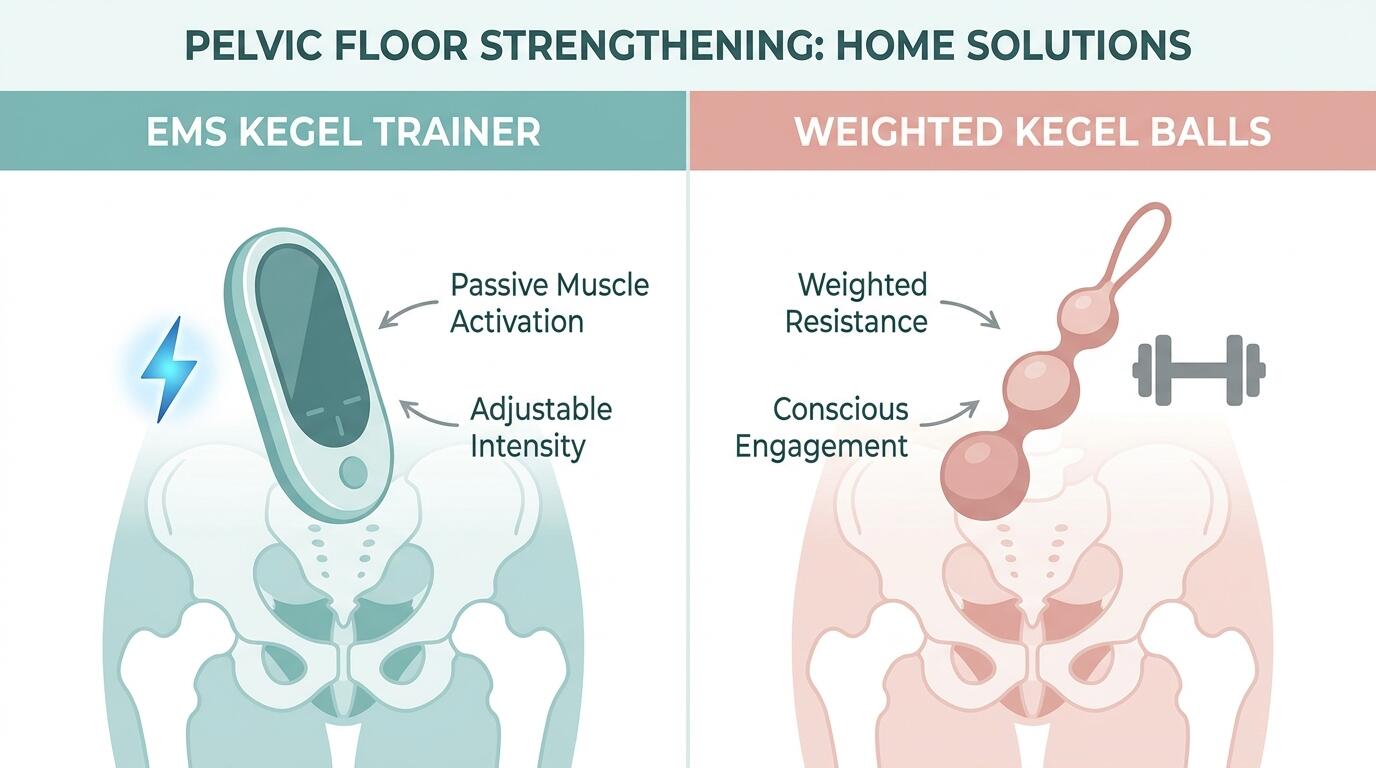
ALT: Side-by-side comparison of an EMS Kegel trainer and weighted Kegel balls showing pelvic floor strengthening options for home users
Advanced Considerations: Special Situations and Common Misconceptions
Postpartum Recovery: EMS Is Often the More Appropriate Starting Point
After childbirth, the pelvic floor undergoes significant trauma — muscles, connective tissue, and nerves may all be affected. Many postpartum women find that they cannot effectively perform Kegel contractions in the early recovery period because the muscles are too weakened or the nerve pathways are temporarily disrupted. In this scenario, Kegel balls are not the appropriate starting tool; they require a level of muscle function that may not yet be present. EMS Kegel trainers, by contrast, can initiate rehabilitation even when voluntary control is minimal, making them the clinically preferred option for the early postpartum window. Always consult with your obstetrician or pelvic floor therapist before beginning any device-based therapy following delivery.
Misconception: More Weight Means Better Results with Kegel Balls
A common mistake among Kegel ball users is progressing to heavier weights too quickly. The pelvic floor is a group of small, nuanced muscles — overloading them prematurely can cause fatigue, discomfort, and potentially worsen symptoms rather than improve them. Progression should be gradual and guided by comfort and control, not by an arbitrary goal of maximum weight.
Misconception: EMS Trainers Are Only for Severe Cases
While EMS Kegel trainers are particularly valuable for those with significant dysfunction, they are by no means limited to that population. Many users with mild to moderate weakness find that EMS training accelerates their progress compared to manual exercises or Kegel balls alone — because the device ensures precise, consistent muscle activation every session. For wellness-conscious individuals seeking optimal pelvic health, an EMS trainer can be a powerful preventive and performance tool.
Can You Use Both?
Yes — and in some cases, a combined approach may offer the best outcomes. Using an EMS Kegel trainer to build foundational strength and neuromuscular awareness, then transitioning to or supplementing with Kegel balls for maintenance, can be a practical long-term strategy. As always, consult a healthcare professional to design a protocol tailored to your specific needs.
Frequently Asked Questions FAQ
Q1: How do I know if an EMS Kegel trainer is right for me?
If you've been performing traditional Kegel exercises for several weeks without noticing improvement in bladder control, pelvic strength, or related symptoms — or if you're unsure whether you're correctly isolating the pelvic floor muscles — an EMS Kegel trainer may be an excellent fit. It removes the guesswork by stimulating the muscles directly, making it especially valuable for postpartum recovery, age-related muscle decline, or any situation involving significant pelvic floor weakness. Consulting a pelvic floor therapist or gynecologist can help confirm the best approach for your individual condition.
Q2: Are Kegel balls safe for long-term regular use?
Kegel balls are generally considered safe for healthy adults when used appropriately — with the correct weight, for appropriate durations, and with proper hygiene practices. However, they are not recommended for individuals with active pelvic infections, advanced pelvic organ prolapse, or during pregnancy without medical clearance. Prolonged use without adequate rest can cause muscle fatigue. Starting with lighter weights, limiting session duration as recommended by a healthcare provider, and listening to your body are all essential safety practices.
Q3: How long does it take to see results with an EMS Kegel trainer compared to Kegel balls?
Timeline varies by individual, baseline muscle condition, and consistency of use. Many users report noticing initial improvements in bladder control and muscle awareness within four to six weeks of regular EMS Kegel training. Kegel balls may produce results over a similar timeframe for those who use them correctly and consistently, though users with significant weakness may find progress slower without the targeted stimulation that EMS provides. Neither device is a quick fix — sustainable pelvic floor improvement requires committed, ongoing practice regardless of the method chosen.
Summary
Choosing between an EMS Kegel trainer and Kegel balls ultimately comes down to three core considerations: the severity of your pelvic floor weakness, your capacity for voluntary muscle engagement, and the level of guidance and structure you need to stay consistent.
Three key takeaways from this Kegel device comparison:
- EMS Kegel trainers are the more clinically robust option for those with significant pelvic floor dysfunction, postpartum recovery needs, or difficulty voluntarily contracting the correct muscles. The device does the targeted work, ensuring accurate muscle activation every session.
- Kegel balls offer a simpler, resistance-based approach suited to individuals with moderate muscle function who are looking for a low-tech maintenance or strengthening tool — but their effectiveness hinges on correct usage and consistent engagement.
- Both devices require realistic expectations and long-term commitment. Pelvic floor rehabilitation is a gradual process — meaningful improvement typically develops over weeks to months of regular, correct practice.
If you're unsure where to start, beginning with an EMS Kegel trainer provides a more structured, error-resistant foundation — especially for those newer to pelvic floor training or returning after an extended gap. From there, you can build awareness, progress your training, and incorporate complementary approaches as your strength improves.
Ready to take control of your pelvic floor health with a trusted, professional-grade solution? Explore iStim's full range of EMS Kegel devices and electrotherapy products at https://istim.com/ and find the right solution tailored to your wellness needs. Trusted by over 20,000 customers, iStim makes clinical-quality electrotherapy safe, simple, and accessible from the comfort of your home.
References
- National Institute of Diabetes and Digestive and Kidney Diseases (NIDDK). "Kegel Exercises."
https://www.niddk.nih.gov/health-information/urologic-diseases/kegel-exercises - Office on Women's Health, U.S. Department of Health & Human Services. "Pelvic Floor Disorders."
https://www.womenshealth.gov/a-z-topics/pelvic-floor-disorders - National Institutes of Health (NIH), National Library of Medicine. "Electrical Stimulation for the Treatment of Stress Urinary Incontinence: A Review."
https://pubmed.ncbi.nlm.nih.gov/ - American College of Obstetricians and Gynecologists (ACOG). "Pelvic Support Problems."
https://www.acog.org/womens-health/faqs/pelvic-support-problems - Mayo Clinic. "Kegel Exercises: A How-To Guide for Women."
https://www.mayoclinic.org/healthy-lifestyle/womens-health/in-depth/kegel-exercises/art-20045283
Note: Standards and clinical guidelines may be updated periodically. Please verify the latest recommendations through official sources or consult a qualified healthcare professional.
About iStim
iStim is a Los Angeles-based electrotherapy brand specializing in professional-grade TENS, EMS, and Kegel devices engineered for home use, backed by ISO-certified Taiwanese manufacturing and trusted by 20,000+ Amazon customers for drug-free pain relief and muscle stimulation. Learn more at istim.com.
© iStim. All rights reserved. This article is provided for informational and educational purposes only and does not constitute medical advice. Always consult a qualified healthcare professional before starting any new therapeutic regimen. Individual results may vary.