
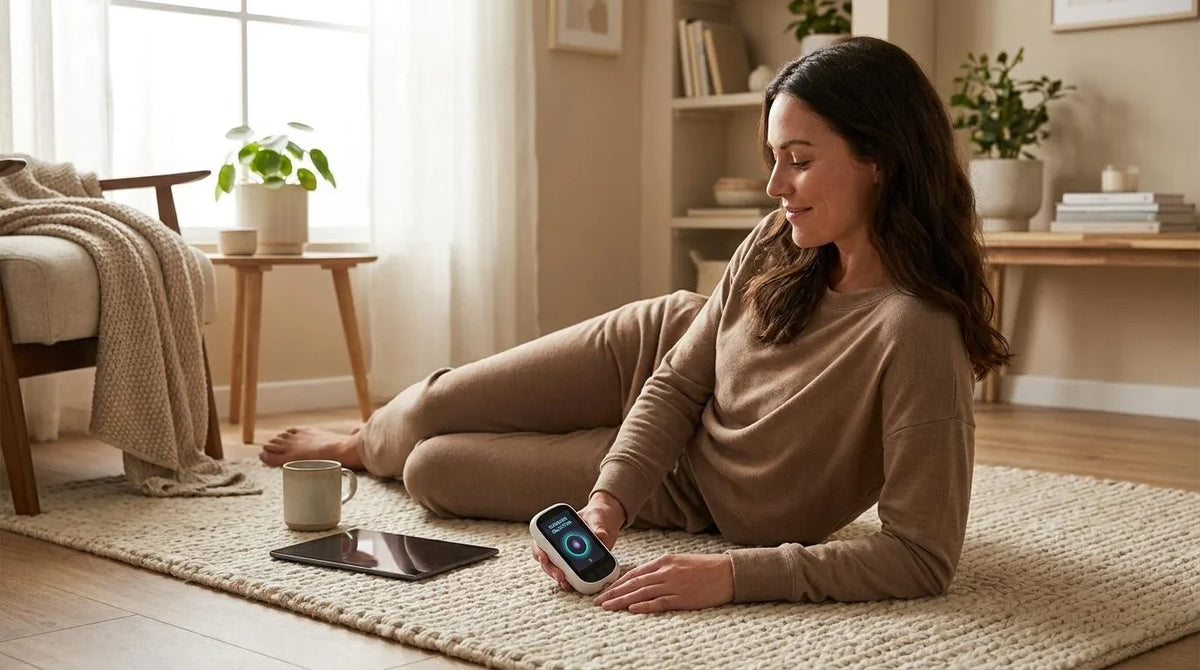
ALT: Woman using a Kegel trainer with preset programs for pelvic floor rehabilitation and muscle strengthening at home
Why a Kegel Trainer with Preset Programs Changes Everything for Pelvic Floor Health
Key Conclusion: A Kegel trainer with preset programs removes the guesswork from pelvic floor rehabilitation by delivering structured, clinically informed stimulation sequences automatically. Rather than relying on willpower and manual timing, users benefit from a guided, progressive routine that builds muscle strength consistently — making preset programs one of the most effective features to look for when choosing a Kegel trainer for bladder control, postpartum recovery, or general pelvic floor strengthening.
Pelvic floor rehabilitation has long been confined to clinical settings or left entirely to self-directed effort — both of which carry significant drawbacks. Clinics are expensive and time-consuming; manual Kegel exercises without feedback are notoriously hard to perform correctly. A purpose-built Kegel trainer equipped with preset programs bridges this gap, delivering professional-level therapy in the comfort of your own home.
What makes preset programs particularly valuable is their ability to replicate the progressive structure that physical therapists design for their patients. Rather than performing random contractions, users move through a sequence of stimulation modes specifically calibrated for different stages of recovery and strengthening. This article explores what to look for, how to use these devices effectively, and why iStim's approach to pelvic floor therapy stands out in a crowded market.
Who Should Consider a Preset-Program Kegel Trainer
✅ Applicable Scenarios:
- Women experiencing stress urinary incontinence, urgency incontinence, or mixed incontinence who want a structured, drug-free rehabilitation option
- Postpartum women (cleared by a healthcare provider) looking to restore pelvic floor muscle tone and address weakness following vaginal or cesarean delivery
- Perimenopausal and postmenopausal women managing pelvic organ prolapse symptoms or reduced muscle elasticity
- Older adults or individuals with limited body awareness who find manual Kegel exercises difficult to perform correctly or consistently
- Fitness-focused individuals who want to supplement core training with targeted pelvic floor strengthening using an evidence-informed device
❌ Not Applicable/Cautions:
- Individuals with implanted electronic devices (such as pacemakers or spinal cord stimulators) should not use electrical stimulation devices without explicit medical clearance
- Women who are pregnant should consult their obstetrician before using any intravaginal electrical stimulation device
- People with active pelvic infections, open wounds, or unexplained pelvic pain should seek medical evaluation before beginning electrical muscle stimulation therapy
- Those who have recently undergone pelvic surgery should wait for physician clearance before using any stimulation probe
Understanding Pelvic Floor Weakness and Why Preset Programs Matter
The pelvic floor is a group of muscles and connective tissue forming a hammock-like structure at the base of the pelvis. These muscles support the bladder, uterus, and rectum, and play a critical role in urinary and bowel control, sexual function, and core stability. When they weaken — through pregnancy, childbirth, hormonal changes, aging, or prolonged inactivity — the consequences can include urinary leakage, pelvic heaviness, reduced sensation, and diminished quality of life.
Traditional Kegel exercises, first described by Dr. Arnold Kegel in the late 1940s, remain a cornerstone of pelvic floor therapy. However, research consistently shows that a significant proportion of people perform them incorrectly without professional guidance — pushing down rather than lifting up, tensing the wrong muscle groups, or contracting with insufficient intensity to produce meaningful neuromuscular adaptation. This is where technology steps in.
Electrical muscle stimulation (EMS) applied to the pelvic floor works by delivering low-level electrical impulses through a probe, causing the pelvic floor muscles to contract involuntarily. This is especially helpful for individuals who have lost proprioceptive awareness of these muscles — a common issue after childbirth or prolonged disuse. The device does the contracting for you, helping re-establish the neuromuscular connection before the user can take over with voluntary contractions.
For a deeper comparison of how EMS compares to manual methods, the article Best Kegel Trainer for Women: EMS vs Manual Kegels provides an evidence-based breakdown that is well worth reading before making a purchase decision.
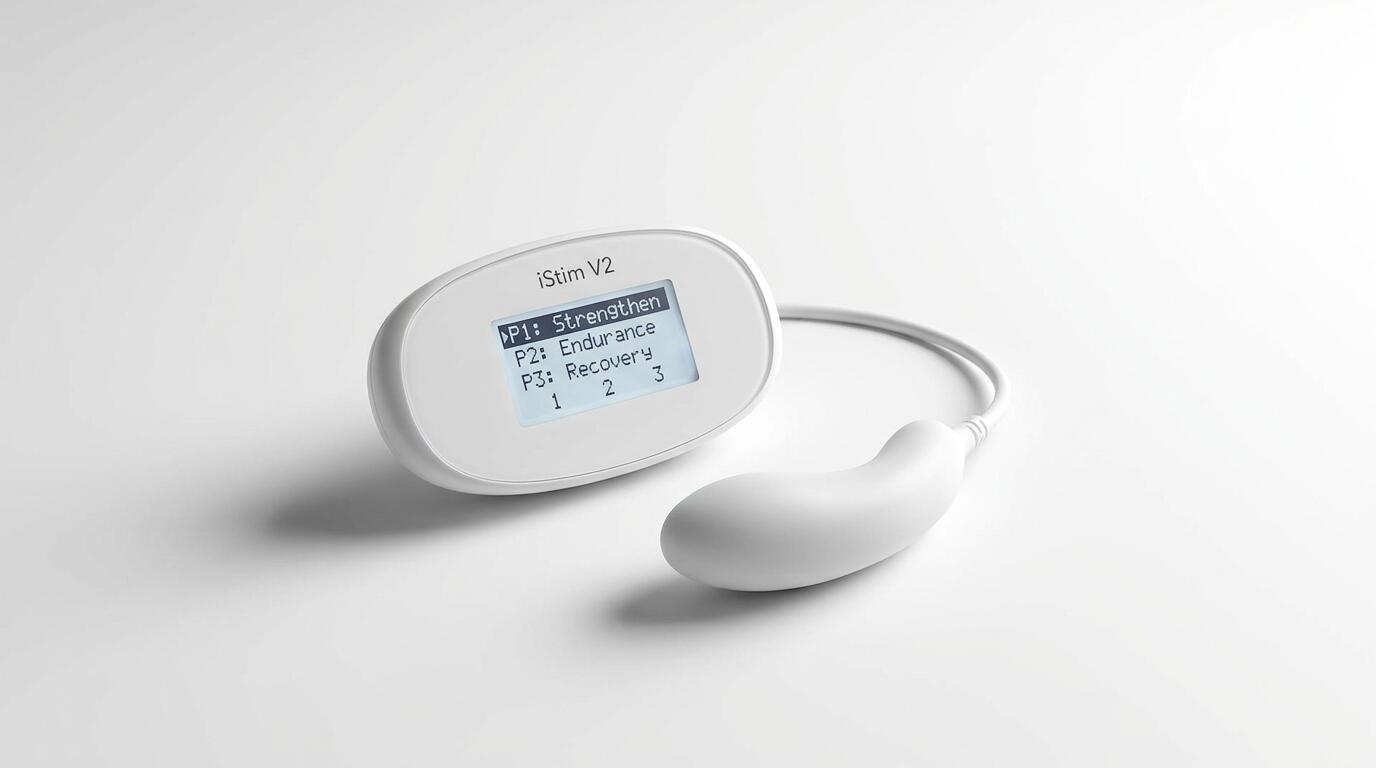
Preset programs take this a step further. Instead of simply choosing a stimulation frequency and intensity and hoping for the best, preset programs encode specific therapeutic protocols directly into the device. Each program typically targets a different aspect of pelvic floor function — from initial muscle awakening and relaxation through to active strengthening and endurance building. The iStim V2 Kegel trainer, for example, features 5 preset programs designed to guide users through a progressive pelvic floor rehabilitation journey, each delivering a distinct waveform pattern and contraction-rest cycle calibrated for a specific therapeutic goal.
This structured approach mirrors what a pelvic floor physiotherapist would prescribe across multiple clinic sessions — but it is accessible at home, on your schedule, without recurring appointment costs. For women who are motivated to take charge of their pelvic health but lack access to specialist care, a preset-program Kegel trainer is often the most practical and effective first step.
Market trends reflect this growing demand. The global pelvic floor muscle trainers market has been expanding steadily as awareness of pelvic floor dysfunction increases and stigma decreases. More women are openly discussing postpartum recovery, incontinence, and pelvic organ prolapse — and more are seeking solutions that combine clinical credibility with home convenience. Devices that offer guided, automated programs are consistently rated higher by users who report better adherence and measurable improvement compared to those using manual-only approaches.
How to Get Started: A Three-Step Quick-Start Guide
Step 1: Choose the Right Device and Program for Your Goal
Before placing the probe and pressing start, take five minutes to identify your primary goal. Are you addressing post-delivery weakness, managing stress incontinence triggered by exercise or sneezing, or working on general pelvic floor conditioning? Most preset-program Kegel trainers, including the iStim V2, include programs labeled or numbered for different purposes — initial stimulation for very weak muscles, active strengthening, endurance, relaxation, and mixed protocols. Reviewing the device manual or consulting the brand's online resources will help you match the right program to your current stage. If in doubt, beginning with the lowest-intensity program is always the safest and most comfortable starting point.
Step 2: Prepare Properly and Insert the Probe Correctly
Comfort and correct placement are non-negotiable for effective results. Clean the probe according to manufacturer instructions before each use. Apply a water-based lubricant to ease insertion. Position yourself lying down or semi-reclined with knees bent — a posture that relaxes the pelvic floor and makes proper probe placement much easier. Insert the probe gently, ensuring it is seated at the correct depth so that the stimulation electrodes are in full contact with the pelvic floor muscles. Start at the lowest intensity setting and gradually increase until you feel a clear but comfortable contraction. The sensation should never be painful — a strong tingling or pulling sensation is normal, but sharp discomfort is a signal to reduce intensity immediately.
Step 3: Follow the Program Consistently and Track Your Progress
A single session will not rebuild pelvic floor strength — consistency is everything. Most clinical protocols recommend sessions of approximately 20 minutes performed several times per week, but always follow your specific device's guidance and any recommendations from your healthcare provider. Use a journal or the notes app on your phone to track your session dates, program used, intensity level, and any symptoms you notice improving over time. Progress with pelvic floor rehabilitation is often gradual; many users report noticing meaningful improvement in bladder control and muscle awareness after several weeks of regular use. If you are looking for a device that also allows you to fine-tune intensity beyond preset defaults, the article Best Pelvic Floor Trainer with Adjustable Intensity explores options worth considering alongside preset programming.
Comparing Your Options: Preset Programs vs. Manual Kegels vs. Biofeedback Devices
When researching pelvic floor trainers, consumers typically encounter three main categories of solution. Understanding how they differ helps clarify why preset-program EMS devices occupy a uniquely practical middle ground.
| Comparison Dimension | Manual Kegel Exercises | Biofeedback Devices | EMS Kegel Trainer with Preset Programs |
|---|---|---|---|
| Requires correct muscle activation by user | Yes — high failure rate without guidance | Yes — provides visual feedback | No — device contracts muscles automatically |
| Structured progressive protocol | User must design own program | Varies by device | Built-in; clinically informed sequences |
| Effective for severely weakened muscles | Limited — hard to contract voluntarily | Limited | Highly effective — works passively |
| Home use convenience | High | Moderate | High |
| Learning curve | Moderate to high | Moderate | Low |
| Professional guidance required | Ideally yes | Ideally yes | Reduced — device guides the user |
| Cost over time | None | Varies | One-time device investment |
The table above makes clear that for users with significantly weakened pelvic floors, limited body awareness, or both, a Kegel trainer with preset programs offers advantages that neither manual exercise nor biofeedback alone can fully match. EMS creates the contraction for you; the preset program sequences those contractions intelligently. Together, they deliver a level of therapeutic structure previously only available in clinical settings.
The iStim V2: A Closer Look at Preset-Program Kegel Training
The iStim V2 is iStim's dedicated pelvic floor stimulation device, engineered specifically for home use by women seeking a professional-grade, drug-free rehabilitation experience. Built on ISO-certified Taiwanese manufacturing standards, it delivers the quality assurance typically associated with medical-grade equipment while remaining genuinely user-friendly for home settings.
The V2 comes equipped with 5 preset programs, each designed to address a different dimension of pelvic floor rehabilitation. This multi-program structure is one of its most clinically meaningful features, because pelvic floor recovery is not a single event — it is a process. A user recovering from childbirth has different needs in week one than she does in week eight. A program designed for initial muscle re-education delivers a different stimulation waveform than one designed for peak strength building or post-exercise relaxation.
Each of the 5 preset programs on the iStim V2 delivers a carefully calibrated sequence of contraction and rest phases, stimulation frequency, and pulse width — parameters that physiotherapists adjust based on patient progress. By encoding these sequences as preset programs, iStim removes the burden of manual configuration from the user while preserving the therapeutic intent of a progressive protocol.
Intensity is adjustable within each program, meaning users are not locked into a fixed stimulation level. This is particularly important because pelvic floor sensitivity varies enormously between individuals — and within the same individual as muscles strengthen over time. Starting at a comfortable, low intensity and progressively increasing it across sessions is the recommended approach, mirroring the progressive overload principles used in physical therapy.
For a detailed examination of the iStim V2's design, ideal user profile, and real-world performance, the article iStim V2 Review: Who Is It Best For? offers a thorough, honest assessment that is especially useful for first-time buyers.
One frequently asked question is which Kegel trainer has preset programs built in as a core feature rather than an afterthought. The iStim V2 is one of the few home-use devices where preset programming is central to the product design — not a bonus feature accessed through a confusing menu. From the moment a user powers on the device, the program selection interface is straightforward, making it accessible even for older adults or those unfamiliar with electronic therapy devices.
Women managing bladder control challenges specifically will also find value in reading about Best Pelvic Floor Trainer for Bladder Control Routines to understand how structured EMS sessions can be incorporated into a daily wellness routine targeting urinary symptoms.
ALT: iStim V2 Kegel trainer device displaying preset program selection for pelvic floor muscle stimulation and bladder control therapy at home
Advanced Considerations: Getting More from Your Kegel Trainer
Progressing Through Programs Intelligently
One of the most common mistakes new users make is staying on the same preset program indefinitely, either because it feels comfortable or because they are unsure when to advance. A helpful guideline — though you should always confirm with your healthcare provider — is to advance to the next program stage when you can complete a full session at your current intensity without discomfort and begin to notice the contractions feeling easier or less effortful. Muscles adapt; the program needs to challenge them progressively to continue producing gains.
Combining EMS with Voluntary Contractions
As your pelvic floor awareness improves, you can begin layering voluntary contractions on top of the device-induced stimulation. This technique — sometimes called "neuromuscular facilitation" — can accelerate strength gains by training both the passive (electrically stimulated) and active (voluntarily contracted) components of muscle function simultaneously. Some programs within the iStim V2's 5 preset programs are particularly suited to this combined approach.
Addressing the Misconception That Bigger Equals Better
A common misconception is that the highest intensity setting produces the fastest results. In reality, excessive intensity can cause muscle fatigue, discomfort, or even avoidance of sessions — the opposite of what you need. Consistent, moderate-intensity sessions performed regularly outperform occasional high-intensity sessions every time. The preset programs are designed to deliver optimal therapeutic dosing; trust the program, and resist the urge to push intensity beyond what is comfortable.
Frequently Asked Questions FAQ
Q1: How do I know which preset program to start with on a Kegel trainer?
If you are new to electrical pelvic floor stimulation or are recovering from childbirth, begin with the lowest or first numbered preset program, which is typically designed for initial muscle activation and re-education. This program uses gentle stimulation to help re-establish neuromuscular connection without overwhelming weakened muscles. Advance through the programs progressively as your comfort and muscle strength increase. When in doubt, consult your healthcare provider or pelvic floor physiotherapist, who can recommend a starting point based on your specific condition and history.
Q2: Is a preset-program Kegel trainer safe to use every day?
Most pelvic floor stimulation protocols recommend sessions several times per week rather than daily, allowing adequate muscle recovery time between sessions — similar to how you would not perform heavy resistance training on the same muscle group every day. However, frequency recommendations vary by device and by individual condition. Always follow the guidance provided in your device manual and consult your healthcare provider if you have an underlying condition such as pelvic organ prolapse, active infection, or recent surgery. iStim devices are designed for safe home use within recommended usage guidelines.
Q3: How long before I see results from using a Kegel trainer with preset programs?
Results vary depending on the severity of pelvic floor weakness, consistency of use, and individual physiology. Many users report noticing improved muscle awareness within the first one to two weeks of regular use. Measurable improvements in bladder control, reduction in leakage episodes, and increased pelvic floor strength are commonly reported after four to eight weeks of consistent sessions. Clinical research on electrical pelvic floor stimulation generally supports a treatment course of several weeks to months for optimal outcomes. Patience and consistency are the most important factors.
Summary
Choosing the best Kegel trainer with preset programs is one of the most impactful decisions a woman can make for her long-term pelvic health. Three core insights from this article are worth carrying forward:
First, preset programs are not a convenience feature — they are a clinical necessity for structured, progressive pelvic floor rehabilitation. Without a guided program, most users either under-stimulate, over-stimulate, or plateau prematurely.
Second, electrical muscle stimulation through a quality device like the iStim V2 — with its 5 preset programs and adjustable intensity — democratizes access to professional-grade therapy. What previously required repeated clinic visits can now be achieved at home, on your schedule, with a device engineered to clinical standards.
Third, consistency trumps intensity. The users who see the most meaningful improvement from pelvic floor stimulation are those who show up regularly, follow their program, and progress methodically — not those who use the highest setting once a week.
If you are ready to take pelvic floor health seriously — whether for bladder control, postpartum recovery, menopause management, or simply building a stronger core — a preset-program Kegel trainer offers the most structured, accessible, and evidence-informed path available outside a clinical setting.
Start Your Pelvic Floor Journey with iStim
Ready to take control of your pelvic floor health from the comfort of home? Explore iStim's full lineup of professional-grade TENS, EMS, and Kegel devices at https://istim.com/ and find the right drug-free solution tailored to your needs. Trusted by over 20,000 customers and built to clinical standards, iStim is here to help you move, feel, and live better — every day.
References
- National Institutes of Health (NIH) — National Institute of Diabetes and Digestive and Kidney Diseases. "Kegel Exercises".
https://www.niddk.nih.gov/health-information/urologic-diseases/kegel-exercises - American College of Obstetricians and Gynecologists (ACOG). "Pelvic Support Problems".
https://www.acog.org/womens-health/faqs/pelvic-support-problems - National Association for Continence (NAFC). "Pelvic Floor Exercises".
https://www.nafc.org/kegel - Cochrane Database of Systematic Reviews. "Electrical stimulation with non-implanted devices for stress urinary incontinence in women".
https://www.cochranelibrary.com/ - Mayo Clinic. "Kegel exercises: A how-to guide for women".
https://www.mayoclinic.org/healthy-lifestyle/womens-health/in-depth/kegel-exercises/art-20045283
Note: Standards and clinical guidelines may be updated over time. Please check the latest official documents or consult a qualified healthcare professional for the most current recommendations.
About iStim
iStim is a Los Angeles-based electrotherapy brand specializing in professional-grade TENS, EMS, and Kegel devices engineered for safe, effective home use — backed by ISO-certified Taiwanese manufacturing and trusted by 20,000+ Amazon customers for drug-free pain relief and muscle stimulation. Learn more at istim.com.
Disclaimer: This article is provided for informational and educational purposes only and does not constitute medical advice. The content is produced in partnership with iStim and reflects general wellness information. Always consult a qualified healthcare professional before beginning any new therapy or treatment program. iStim is not responsible for any actions taken based on the information presented in this article.