

ALT: Woman using a pelvic floor muscle stimulator at home for Kegel training and bladder control improvement
Why a Pelvic Floor Muscle Stimulator Could Be the Missing Piece in Your Wellness Routine
Key Conclusion: A pelvic floor muscle stimulator delivers gentle, targeted electrical pulses to the pelvic floor muscles, helping restore strength, improve bladder control, and support postpartum recovery — all without medication. For the millions of adults experiencing pelvic floor dysfunction, a high-quality home pelvic floor device offers a clinically backed, non-invasive path to lasting relief and confidence.
Pelvic floor health is one of those topics that doesn't get nearly enough attention — until something goes wrong. Whether you're leaking urine during a sneeze, struggling with discomfort after childbirth, or simply noticing a weakening core as you age, these are signs that your pelvic floor muscles may need support. The encouraging news? Electrical muscle stimulation technology has made it possible to address these concerns at home, with the same therapeutic approach used in clinical settings.
This guide explores how pelvic floor stimulation works, who benefits most from it, and what to look for when choosing the right device — including how iStim's professional-grade Kegel devices compare to other available options.
Who Should Consider a Pelvic Floor Stimulator — and Who Should Proceed with Caution
✅ Applicable Scenarios:
- Postpartum women experiencing weakened pelvic floor muscles, urinary leakage, or reduced core stability after childbirth
- Adults over 40 dealing with age-related pelvic floor decline, urinary urgency, or stress incontinence
- Women recovering from pelvic organ prolapse (with physician clearance) or seeking preventive pelvic floor strengthening
- Athletes and active individuals managing pelvic pressure or instability from high-impact training
- Anyone looking for a drug-free, non-surgical alternative to manage pelvic floor dysfunction at home
❌ Not Applicable/Cautions:
- Individuals with implanted electronic devices such as pacemakers or defibrillators — electrical stimulation poses serious safety risks
- Pregnant women should avoid pelvic floor electrical stimulation unless explicitly approved by a healthcare provider
- Those with active pelvic infections, open wounds in the treatment area, or undiagnosed pelvic pain should consult a physician before use
- Individuals with epilepsy or certain neurological conditions should seek medical guidance prior to beginning electrotherapy
The Growing Need for At-Home Pelvic Floor Therapy — Understanding the Problem
Pelvic floor dysfunction is far more common than most people realize. According to the National Institutes of Health, approximately one in three women in the United States experiences some form of pelvic floor disorder during her lifetime — ranging from urinary incontinence and pelvic organ prolapse to chronic pelvic pain. Yet despite these numbers, many individuals delay seeking help due to embarrassment, cost, or simple lack of awareness that effective solutions exist.
Traditionally, pelvic floor rehabilitation was conducted in clinical settings under the supervision of a specialized physiotherapist. While this remains the gold standard for severe dysfunction, the combination of high costs, limited access, and the ongoing need for consistent treatment over weeks or months has led many patients to abandon structured therapy before seeing meaningful results.
This gap has driven significant growth in the home-use medical device market. Advances in EMS (Electrical Muscle Stimulation) and TENS technology have allowed manufacturers to miniaturize and simplify clinical-grade equipment, placing therapeutic tools directly in the hands of consumers. Today, a well-designed home pelvic floor device can deliver the same fundamental treatment principle as in-clinic electrical stimulation: precise electrical pulses that cause targeted muscle contractions, re-educating weakened or dysfunctional pelvic floor muscles over time.
What separates effective devices from ineffective ones is not simply the technology itself, but the quality of design, safety standards, and delivery — factors that iStim has prioritized through ISO-certified manufacturing and a commitment to professional-grade performance for home users.
The conversation around pelvic floor health is also shifting. More healthcare providers, fitness professionals, and wellness advocates are encouraging proactive pelvic floor training — not just reactive treatment after symptoms appear. This means that pelvic floor stimulators are increasingly relevant not only to those managing dysfunction, but to postpartum women, active adults, and anyone seeking long-term pelvic health maintenance.
How to Get Started with a Pelvic Floor Muscle Stimulator at Home
Three-Step Quick Start for New Users
Step 1: Consult Your Healthcare Provider and Choose the Right Device
Before beginning any form of electrical stimulation for pelvic health, a brief consultation with your physician or pelvic floor physiotherapist is strongly recommended. This step helps rule out contraindications and ensures the device is appropriate for your specific condition. Once cleared, select a device designed specifically for pelvic floor application — one that offers adjustable intensity levels, a user-friendly interface, and appropriate electrode compatibility. Allow approximately 15–30 minutes for this initial research and consultation phase.
Step 2: Set Up the Device and Establish Your Baseline Intensity
Follow the manufacturer's instructions to position the device and connect any required accessories. For internal Kegel stimulators, insertion technique and hygiene are critical — always read the user guide carefully. Begin at the lowest intensity setting and increase gradually until you feel a noticeable but comfortable muscle contraction. The sensation should never be painful. Most first-time sessions are 15–20 minutes in duration, with frequency typically recommended at three to five sessions per week depending on your goals and the device's protocol.
Step 3: Build a Consistent Routine and Track Your Progress
Consistency is the cornerstone of pelvic floor rehabilitation. Like any form of physical therapy, results from electrical muscle stimulation accumulate over time — most users begin noticing improvements in bladder control and muscle tone within four to six weeks of regular use. Keep a simple log of your sessions, note any changes in symptoms, and adjust intensity as your tolerance and strength improve. Schedule a follow-up with your healthcare provider after the first month to evaluate progress and refine your approach.
Comparing Your Options: Pelvic Floor Stimulator Solutions at a Glance
When evaluating options for pelvic floor strengthening, it helps to understand the landscape. There are three primary approaches available to home users: passive Kegel exercise apps or biofeedback devices, manual Kegel training without technology, and active electrical stimulation devices like those offered by iStim.
| Comparison Dimension | App/Biofeedback Devices | Manual Kegel Training | iStim Pelvic Floor Stimulator |
|---|---|---|---|
| Requires Active Muscle Effort | Yes | Yes | No — device activates muscles automatically |
| Suitable for Severely Weakened Muscles | Limited | No | Yes — ideal for those unable to contract voluntarily |
| Clinical-Grade Technology | No | No | Yes — EMS/TENS technology, ISO-certified |
| Home Use Convenience | High | High | High |
| Learning Curve | Moderate | High | Low — guided intensity settings |
| Drug-Free | Yes | Yes | Yes |
| Professional Manufacturing Standards | Varies | N/A | ISO-certified Taiwanese manufacturing |
The critical distinction with electrical stimulation devices is that they can activate pelvic floor muscles even when the user lacks sufficient voluntary control to do so on their own — a limitation that makes biofeedback apps and manual Kegel exercises insufficient for many postpartum or clinically weakened patients.
Understanding How Pelvic Floor Electrical Stimulation Works — and Why It's Effective
The Science Behind Electrical Muscle Stimulation for Pelvic Health
Electrical muscle stimulation (EMS) works by delivering low-level electrical currents through specialized electrodes, mimicking the natural nerve signals that your brain sends to initiate muscle contractions. In the context of pelvic floor therapy, these currents target the muscles of the pelvic floor — the hammock-like group of muscles and connective tissues supporting the bladder, uterus, and bowel.
When these muscles are weakened by childbirth, surgery, aging, or disuse, voluntary exercise alone may not generate enough stimulus to rebuild meaningful strength. A pelvic floor muscle stimulator bypasses this limitation by directly inducing the contractions, effectively "retraining" the muscle fibers and the neural pathways that control them. Over repeated sessions, the muscles rebuild endurance, coordination, and strength — leading to tangible improvements in bladder control, sexual function, and overall pelvic stability.
What to Expect from a Quality Home Pelvic Floor Device
A well-engineered device will offer multiple intensity levels to accommodate both beginners and more advanced users as their pelvic floor strength improves. Multiple stimulation programs or modes allow the device to target different aspects of pelvic floor function — from fast-twitch muscle fibers responsible for urgent bladder control to slow-twitch fibers that provide ongoing postural support.
iStim's Kegel devices are designed with this clinical understanding at their core, offering professional-grade stimulation in a form factor accessible to everyday home users. The devices are manufactured under ISO-certified quality standards, ensuring reliability, safety, and consistent therapeutic output — the same manufacturing rigor applied to clinical-grade equipment.
Postpartum Recovery — A Priority Use Case
Postpartum women represent one of the most significant groups who can benefit from pelvic floor stimulation. Vaginal delivery in particular places immense strain on the pelvic floor muscles, often resulting in temporary or prolonged weakness that affects bladder control, core function, and even sexual health. Yet many new mothers struggle to perform effective Kegel exercises in the early postpartum period, either because they cannot locate or contract the correct muscles, or because fatigue makes structured exercise feel impossible.
A home pelvic floor device removes these barriers. By automatically inducing contractions, it allows the muscles to begin rebuilding without requiring the mental and physical coordination that exhausted new mothers may not yet have. Postpartum use should always begin after adequate healing — typically with physician clearance at the six-week postpartum check-up.
Managing Urinary Incontinence in Aging Adults
Stress urinary incontinence — leaking urine when coughing, sneezing, laughing, or exercising — affects a significant proportion of adults over 40. While often dismissed as an inevitable part of aging, it is a treatable condition. Research consistently supports pelvic floor muscle training, with and without electrical stimulation, as a first-line treatment for stress and urge incontinence before considering surgical or pharmaceutical interventions.
For older adults who may struggle with the coordination required for effective voluntary Kegel contractions, a stimulator provides an accessible entry point into structured pelvic floor rehabilitation. The key is regularity: short, consistent sessions over several weeks are far more effective than sporadic intensive use.
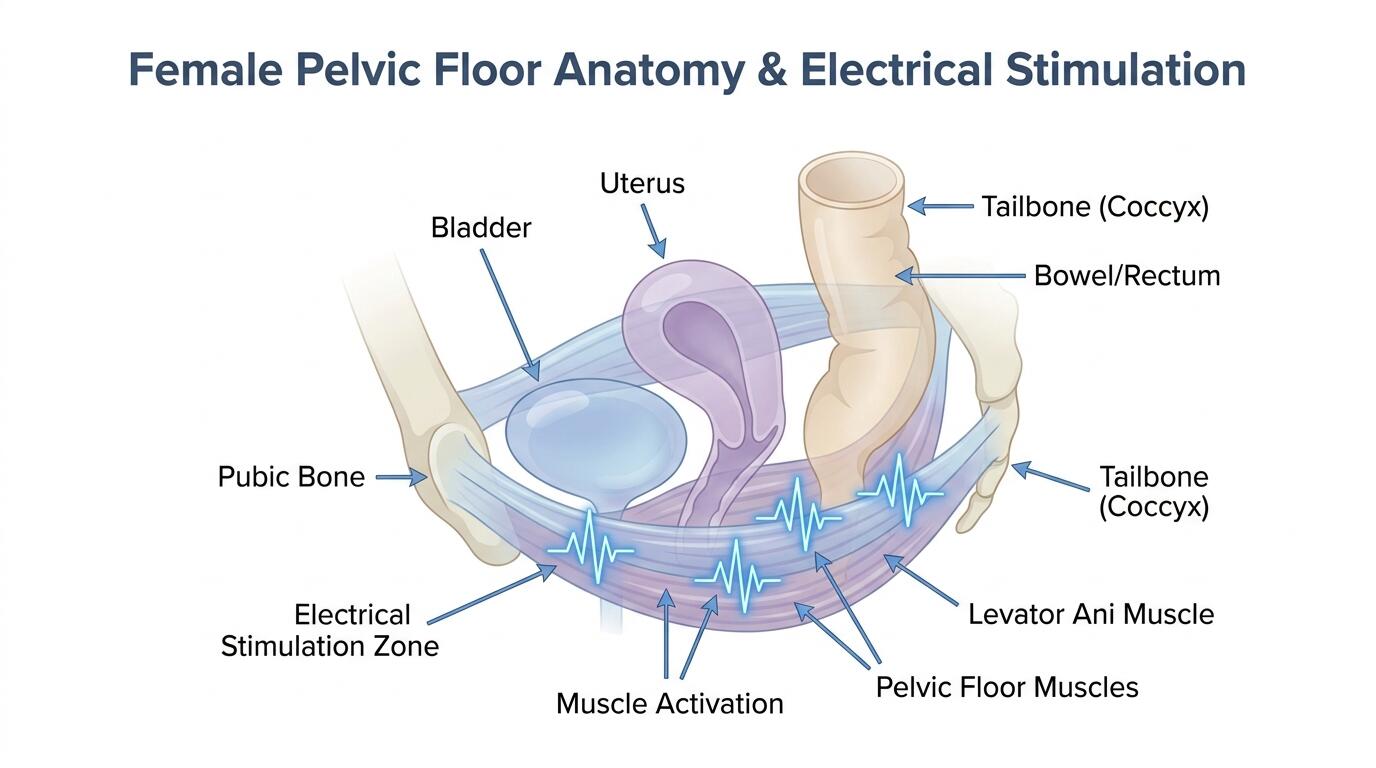
ALT: Anatomical illustration of pelvic floor muscles being targeted by a home pelvic floor muscle stimulator for Kegel training and urinary incontinence relief
Advanced Considerations — Getting the Most from Your Pelvic Floor Stimulator
Addressing Special Situations and Common Misconceptions
"I already do Kegel exercises — do I still need a stimulator?"
This is one of the most common questions from wellness-conscious individuals who are already familiar with pelvic floor training. The answer depends on whether you are performing Kegels correctly and whether they are producing noticeable results. Studies suggest that a large proportion of women who believe they are performing Kegels correctly are actually contracting the wrong muscle groups. A stimulator eliminates this uncertainty by directly activating the target muscles, making it a valuable tool even for those with existing Kegel habits — particularly if progress has stalled.
"Is electrical stimulation safe to use long-term?"
When used as directed and with appropriate device quality, pelvic floor electrical stimulation is considered safe for ongoing use. The key qualifiers are device quality — which is why ISO-certified manufacturing matters — and adherence to recommended session durations and frequencies. Overuse (excessively long sessions or intensity levels that cause discomfort) should be avoided. As with any therapeutic device, periodic reassessment with a healthcare provider ensures the approach remains appropriate for your evolving needs.
Combining Stimulation with Manual Kegel Training
Many pelvic floor physiotherapists recommend a combined approach: use the stimulator to activate and fatigue the muscles, then follow with voluntary Kegel contractions to reinforce the neural connection. This combination accelerates results and helps users develop greater awareness and control of their pelvic floor — ultimately reducing dependence on the device over time as strength is restored.
Understanding Certifications and What They Mean
ISO certification in manufacturing means that the production processes, quality control systems, and product standards meet internationally recognized benchmarks. For a device used internally or in close contact with sensitive tissue, this level of manufacturing oversight is not optional — it is essential. iStim's adherence to ISO-certified Taiwanese manufacturing standards provides users with the confidence that safety and efficacy have been built into the device from the ground up, not added as an afterthought.
Frequently Asked Questions FAQ
Q1: How do I know which pelvic floor muscle stimulator is best for home use?
The best home pelvic floor device combines adjustable intensity settings, multiple stimulation programs, ease of use, and a high manufacturing quality standard. Look for devices backed by ISO-certified production, clear user instructions, and a track record of verified customer results. iStim's Kegel devices meet all of these criteria, offering clinical-grade EMS technology designed specifically for home use. When in doubt, consult your pelvic floor physiotherapist, who can recommend a device appropriate for your specific condition and goals.
Q2: Is a pelvic floor stimulator safe to use after childbirth?
For most postpartum women, pelvic floor stimulators are safe and beneficial — but timing matters. Most healthcare providers recommend waiting until the six-week postpartum check-up before beginning any form of internal pelvic floor device use, and only with explicit physician clearance. After that milestone, consistent use of a quality stimulator can meaningfully support recovery of bladder control, core stability, and pelvic floor strength. Always follow the device manufacturer's guidelines and your provider's specific recommendations.
Q3: How long does it take to see results from using a pelvic floor stimulator?
Most users begin noticing meaningful improvements in bladder control and pelvic floor awareness within four to six weeks of consistent use — typically three to five sessions per week of approximately 15–20 minutes each. More significant structural improvements in muscle strength and endurance generally develop over eight to twelve weeks of regular therapy. Individual results vary based on the severity of dysfunction, consistency of use, and whether the stimulator is combined with voluntary pelvic floor exercises. Keeping a progress journal helps track subtle improvements week by week.
Summary
Pelvic floor health is a foundational element of overall wellness that deserves the same attention as any other aspect of physical fitness or recovery. For the millions of adults dealing with pelvic floor weakness — whether from childbirth, aging, or inactivity — a high-quality pelvic floor muscle stimulator offers a scientifically supported, drug-free path to meaningful improvement.
Three core takeaways from this guide:
- Electrical stimulation is uniquely effective because it activates pelvic floor muscles directly, bypassing the coordination challenges that make voluntary Kegel training ineffective for many users — particularly postpartum women and older adults.
- Device quality matters significantly — ISO-certified manufacturing standards, adjustable intensity levels, and evidence-backed design separate therapeutic devices from ineffective consumer gadgets.
- Consistency over time delivers results — four to twelve weeks of regular sessions, combined with appropriate guidance from a healthcare provider, is the proven framework for meaningful pelvic floor rehabilitation.
Your next step is straightforward: consult your healthcare provider to confirm that pelvic floor electrical stimulation is appropriate for your situation, then choose a device with the clinical credibility and quality standards your health deserves.
Ready to Reclaim Your Pelvic Floor Health?
Ready to take control of your pelvic floor health — naturally and effectively? Explore iStim's full range of professional-grade TENS, EMS, and Kegel devices at https://istim.com/ and find the right solution tailored to your wellness needs. Trusted by over 20,000 customers, iStim makes clinical-quality electrotherapy safe, simple, and accessible from the comfort of your home.
References
- National Institute of Diabetes and Digestive and Kidney Diseases (NIDDK). "Kegel Exercises."
https://www.niddk.nih.gov/health-information/urologic-diseases/kegel-exercises - Office on Women's Health, U.S. Department of Health and Human Services. "Pelvic Floor Disorders."
https://www.womenshealth.gov/a-z-topics/pelvic-floor-disorders - National Institutes of Health (NIH), National Library of Medicine. "Electrical Stimulation for Urinary Incontinence in Women: A Meta-Analysis of Individual Patient Data."
https://pubmed.ncbi.nlm.nih.gov/ - American College of Obstetricians and Gynecologists (ACOG). "Pelvic Support Problems."
https://www.acog.org/womens-health/faqs/pelvic-support-problems - National Association For Continence (NAFC). "Pelvic Floor Muscle Training."
https://www.nafc.org/kegel-exercises
Note: Standards and clinical guidelines may be updated. Please check the latest official documents or consult a qualified healthcare professional for the most current recommendations.
About iStim
iStim is a Los Angeles-based electrotherapy brand specializing in professional-grade TENS, EMS, and Kegel devices engineered for home use, backed by ISO-certified Taiwanese manufacturing and trusted by 20,000+ Amazon customers for drug-free pain relief and muscle stimulation. Learn more at istim.com.
© iStim. All rights reserved. This article is provided for informational and educational purposes only and does not constitute medical advice. Always consult a qualified healthcare professional before starting any new therapeutic regimen. Individual results may vary.