

ALT: Family using a professional-grade TENS EMS unit at home for drug-free pain relief and muscle recovery
Why a TENS EMS Unit Belongs in Every Family Home
Key Conclusion: A quality TENS EMS for family use offers something rare in modern wellness: a single, drug-free solution that addresses the pain and recovery needs of virtually every household member — from the athlete nursing sore muscles to the grandparent managing chronic back pain. With the right home therapy kit, families can access clinical-level electrotherapy on their own schedule, without repeated clinic visits or reliance on medication.
Electrotherapy has long been a staple of physical therapy clinics and sports medicine facilities. What has changed dramatically in recent years is accessibility. Devices that once required a prescription or a professional operator are now available in home-friendly formats that are safe, intuitive, and genuinely effective. For health-conscious families looking to take charge of their wellness — whether for pain management, muscle recovery, or pelvic floor health — investing in a TENS/EMS combo unit may be one of the most practical decisions they make.
The key, however, is understanding what to look for. Not all consumer-grade devices deliver the output quality, safety standards, or versatility that a multi-member household demands. This guide will walk you through everything you need to know to choose the best TENS EMS unit for family home use — and use it confidently.
Who This Guide Is For — and Who Should Proceed with Caution
✅ Applicable Scenarios:
- Adults managing chronic or acute pain conditions such as lower back pain, neck tension, joint discomfort, or post-exercise soreness
- Athletes and active individuals seeking faster muscle recovery and reduced delayed-onset muscle soreness (DOMS)
- Postpartum women looking to support pelvic floor rehabilitation with Kegel-compatible electrostimulation
- Older adults aged 55+ who want drug-free alternatives to over-the-counter pain medications
- Households with multiple members who each have different wellness needs but want a single versatile device
❌ Not Applicable/Cautions:
- Individuals with implanted electronic devices (e.g., pacemakers, neurostimulators) — always consult a physician before use
- Pregnant women should avoid using TENS/EMS on the abdomen or lower back without explicit medical guidance
- Children under the recommended age should not use these devices without professional supervision
- Anyone with active skin infections, open wounds, or compromised sensation in the treatment area should seek medical advice first
- People with epilepsy or certain heart conditions should consult a healthcare provider prior to starting any electrotherapy regimen
The Growing Case for Home Electrotherapy: What the Research Tells Us
Over the past decade, the demand for non-pharmaceutical pain management tools has grown substantially. Concerns about opioid dependency, the rising cost of physical therapy sessions, and a broader cultural shift toward proactive self-care have all contributed to increased interest in devices like TENS and EMS units.
Transcutaneous Electrical Nerve Stimulation (TENS) works by delivering low-voltage electrical pulses through the skin to interrupt pain signals traveling to the brain — a mechanism supported by decades of clinical literature. Electrical Muscle Stimulation (EMS), by contrast, targets motor nerves to elicit muscle contractions, making it a valuable tool for rehabilitation, strength maintenance, and recovery acceleration.
When combined into a single device, TENS and EMS functions create a versatile home therapy kit that can serve genuinely different needs across different days — and different family members. On Monday, a runner might use EMS mode after a long training run. By Thursday, the same device might help a parent unwind after a day of desk work using TENS mode for lower back tension. On the weekend, an older family member could rely on it for knee discomfort during a flare-up.
For a deeper exploration of how these two modalities compare and which one suits specific goals, this comprehensive guide on TENS vs EMS: Which Device Should You Choose? is an excellent starting point before committing to a purchase.
The clinical evidence base for TENS and EMS continues to grow. Studies published through platforms like the National Institutes of Health's PubMed have consistently supported TENS as a viable adjunct therapy for musculoskeletal pain. EMS, meanwhile, has been validated in physiotherapy settings for muscle re-education, especially post-surgery or post-injury.
For families, the question shifts from "does this work?" to "which device works best for us?" — and that's precisely what this guide is designed to answer.
How to Get Started: A Three-Step Quick Start for Family Home Use
Getting Up and Running with Your TENS EMS Device
Step 1: Understand the Modes and Match Them to Your Needs
Before attaching a single electrode pad, take 10–15 minutes to review your device's mode guide. Quality TENS/EMS combo units typically offer multiple pre-set programs alongside adjustable intensity levels. TENS modes are ideal for pain relief and relaxation; EMS modes are designed for muscle strengthening and recovery. Knowing which mode applies to which family member's need prevents misuse and maximizes benefit. Most devices include a quick-reference card — keep it accessible.
Step 2: Prepare the Skin and Position Electrode Pads Correctly
Clean and dry the skin at the target area before applying electrode pads. Proper pad placement is critical for both effectiveness and safety. For back pain, pads are typically placed on either side of the spine in the lumbar region — never directly over the spine itself. For muscle recovery in the legs, placement follows the muscle belly. Consult your device's included body diagram or refer to the manufacturer's placement guide. Allow 20–30 minutes for a standard session, adjusting intensity to a comfortable, therapeutic level — never to the point of pain.
Step 3: Build a Routine That Works for the Whole Household
Consistency is key. Electrotherapy delivers the most meaningful results when used regularly rather than sporadically. Establish simple household protocols: for example, the athlete uses EMS post-workout three times per week; the parent uses TENS for 20 minutes after work on weekdays; the older family member follows a knee-relief program on alternating days. Most devices are straightforward enough that each household member can manage their own session independently once trained. Store electrode pads properly after each use to extend their lifespan.
Comparing Your Options: What Separates a Good Family TENS EMS Unit from a Great One
Choosing the right device for a household with varied needs requires looking beyond basic marketing claims. Here is a practical comparison of the types of devices available and the dimensions that matter most for family use.
A single-mode TENS-only unit may suffice for one person with a specific pain complaint, but it limits the household's versatility. A dedicated EMS device serves athletes well but does nothing for chronic pain relief. A combo TENS/EMS unit — especially a multi-channel model — offers the broadest value for a family home setting.
| Comparison Dimension | Single-Mode TENS Unit | Single-Mode EMS Unit | TENS/EMS Combo Unit |
|---|---|---|---|
| Pain Relief | ✅ Primary function | ❌ Not designed for this | ✅ Dual capability |
| Muscle Recovery & Stimulation | ❌ Limited | ✅ Primary function | ✅ Dual capability |
| Multi-User Versatility | Low | Low | High |
| Treatment Area Coverage | Limited by channel count | Limited by channel count | Expanded with 4-channel models |
| Value for Household | Moderate | Moderate | High |
| Typical Use Case Fit | Single condition, single user | Athletes / rehab focus | Entire family's varied needs |
As the table illustrates, a TENS/EMS combo unit consistently outperforms single-mode devices when the goal is serving a household rather than one individual. Within the combo category, channel count becomes a particularly important differentiator. A 4-channel device allows simultaneous stimulation of multiple muscle groups or a wider pain area, reducing session time and improving coverage.
To understand why this matters in practice, this detailed breakdown of why channels matter in a TENS unit explains how electrode configuration affects therapeutic outcomes across different body regions.
Key Features to Look for in a Family TENS EMS Unit
Output Quality and Safety Certification
For family use, safety is non-negotiable. The manufacturing quality of the device directly affects the consistency of electrical output and, by extension, both effectiveness and safety. Look for devices backed by ISO-certified manufacturing — this ensures production standards align with internationally recognized quality benchmarks.
iStim's devices are built with ISO-certified Taiwanese manufacturing, a distinction that reflects rigorous quality control processes from component sourcing through final assembly. This is a meaningful credential when you're selecting a device that multiple household members will use repeatedly over time.
Program Variety and Intensity Range
A family with diverse needs — from post-run muscle fatigue to arthritic knee pain to postpartum pelvic floor recovery — requires a device with sufficient program depth. Look for a wide range of pre-set modes covering massage, pain relief, muscle toning, and rehabilitation. Adjustable intensity across a wide range ensures that both a sensitive older adult and a trained athlete can find their therapeutic sweet spot on the same device.
Electrode Pad Compatibility and Longevity
Electrode pads are consumable components, and in a multi-user household, they see heavier use. Consider whether the device supports standard electrode sizes, whether replacement pads are readily available, and whether the device includes enough pads out of the box to support multiple simultaneous users. Exploring options for rechargeable TENS EMS machines with electrode pads can help you understand which bundle configurations offer the best long-term value.
Portability and Power Source
A rechargeable device eliminates the ongoing cost and inconvenience of battery replacement — an important consideration when the device is in frequent, multi-user rotation. Look for a battery life that supports multiple sessions between charges, and a form factor that is compact enough to store conveniently but robust enough to withstand regular handling.
User Interface and Ease of Use
Clinical effectiveness means nothing if family members won't use the device because it's confusing. A clear display, intuitive controls, and well-organized mode selection make a significant difference in household adoption. iStim designs its devices with accessibility in mind — ensuring that a teenager recovering from a sports injury and a grandparent managing hip discomfort can both operate the same device without frustration.
For households specifically evaluating iStim's lineup, the EV-805 review provides an in-depth look at who this TENS EMS combo machine best serves — including practical insights on real-world usability that go beyond spec sheets.
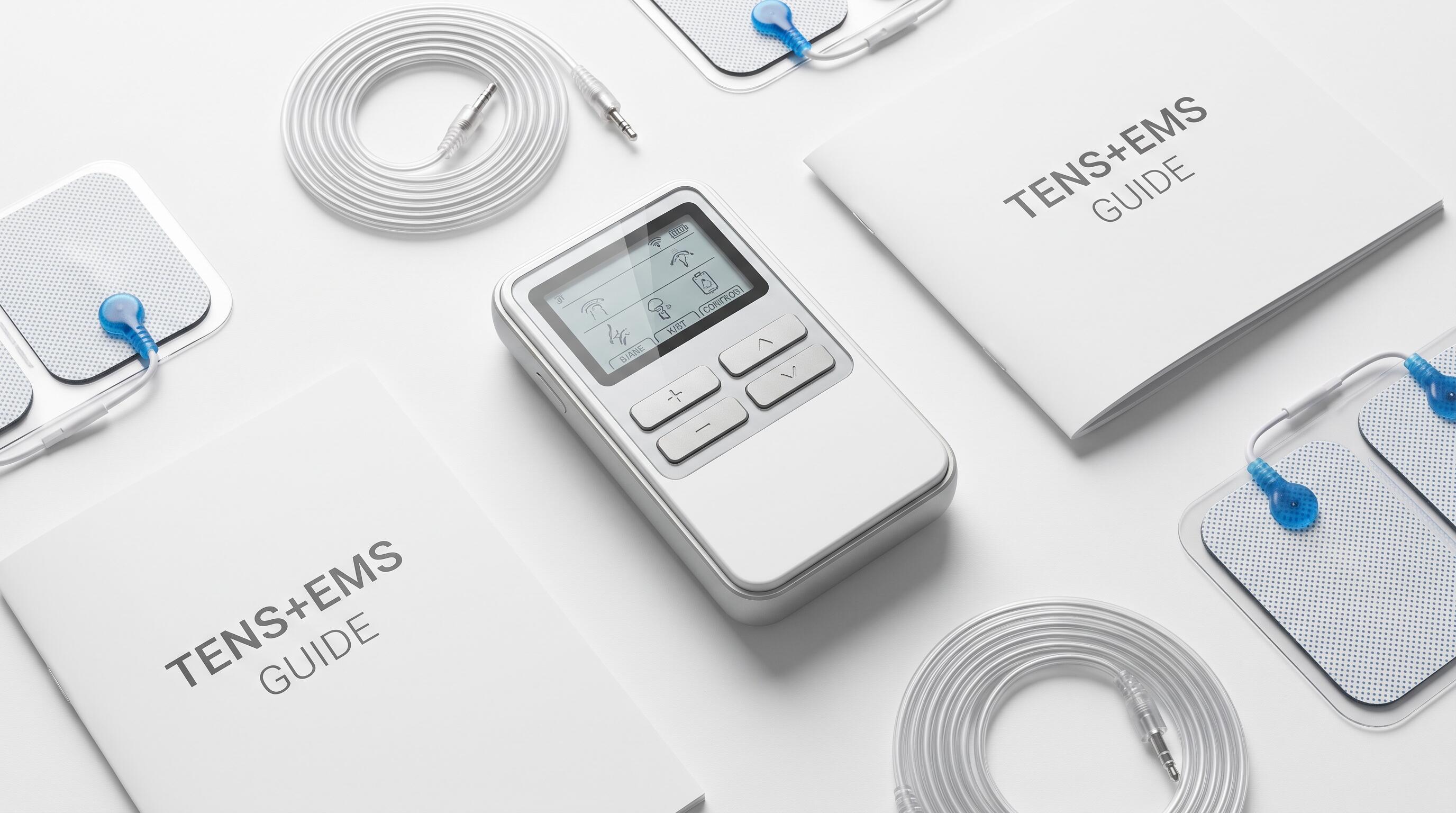
ALT: Professional-grade TENS EMS combo unit with electrode pads for home therapy — ideal for family pain relief and muscle recovery
Advanced Considerations: Getting the Most Out of Family Electrotherapy
Addressing Special Situations at Home
Managing Multiple Conditions Simultaneously
Larger households may find that multiple family members want to use the device at overlapping times. A practical solution is to establish a shared calendar for device use, assign each member their own set of electrode pads (clearly labeled), and take advantage of 4-channel models that can treat two separate body areas at once — allowing two users to share a session if the device supports independent channel control.
Post-Surgery and Rehabilitation Contexts
If a family member is recovering from orthopedic surgery or a significant injury, electrotherapy may form part of their prescribed rehabilitation program. In these cases, always follow the guidance of the supervising physical therapist regarding mode selection, intensity, and session frequency. Home TENS/EMS use can effectively extend the benefit of clinic-based therapy between appointments — but it should complement, not replace, professional guidance.
Pelvic Floor Health — A Frequently Overlooked Application
Many families may not immediately associate TENS/EMS with pelvic floor health, but this is one of the most clinically supported applications for electrical stimulation. Postpartum women, in particular, often experience significant pelvic floor weakness following childbirth. Kegel training devices that leverage electrical stimulation can help accelerate rehabilitation in a private, home-based setting. iStim's product range includes dedicated Kegel trainers for this purpose, extending the brand's home therapy value beyond standard pain and recovery use cases.
Common Misconceptions About Home Electrotherapy
Misconception: "More intensity means faster results."
This is one of the most persistent and potentially harmful misconceptions. Intensity should always be set to the highest comfortable level — not the maximum available. Therapeutic benefit comes from sustained, appropriate stimulation, not from discomfort. Excessive intensity can cause skin irritation, muscle fatigue, or, in rare cases, bruising.
Misconception: "TENS and EMS are the same thing."
While both use electrical current, they target different nerve types and produce different physiological effects. TENS primarily acts on sensory nerves to modulate pain perception. EMS acts on motor nerves to produce muscle contractions. Understanding this distinction — which the guide to the best TENS EMS combo machine for home use covers in practical detail — helps families select the right mode for each situation.
Misconception: "These devices are only for elderly or injured people."
Electrotherapy benefits users across a wide age and fitness spectrum. Elite athletes use EMS for performance enhancement and recovery. Young adults use TENS for stress-related muscle tension. The technology is modality-agnostic in the best possible sense — it serves whoever brings a genuine therapeutic need.
Frequently Asked Questions FAQ
Q1: How do I choose the right TENS EMS unit that works for the whole family?
Look for a combo device that offers both TENS and EMS modes, multiple pre-set programs, and a wide intensity range. Channel count matters — a 4-channel unit allows coverage of larger or multiple treatment areas simultaneously. Prioritize ISO-certified manufacturing for safety assurance. Consider ease of use for all age groups in your household, and ensure replacement electrode pads are readily available and affordable. iStim's product lineup is specifically designed to meet these multi-user household requirements.
Q2: Is it safe for multiple family members to share the same TENS EMS device?
Yes, with proper hygiene practices. Each user should have their own set of electrode pads to prevent cross-contamination and maintain pad adhesion quality. The device itself can be safely shared, provided each user selects appropriate settings for their specific condition. Users with contraindications — such as implanted cardiac devices, pregnancy, or active skin conditions — should consult a healthcare provider before using any electrotherapy device, even one that other household members use safely.
Q3: How long does it take to see results from regular TENS EMS use at home?
Results vary by condition and consistency of use. Many users report noticeable pain relief from TENS within the first session, though cumulative benefits build over consistent use across several weeks. EMS-based muscle recovery typically shows meaningful improvement in muscle soreness and recovery time after several weeks of regular post-workout sessions. For pelvic floor rehabilitation with Kegel stimulation, most programs recommend a multi-week course of consistent use before assessing outcomes. Setting realistic expectations and maintaining a regular schedule is the most reliable path to lasting results.
Summary
Investing in a quality TENS EMS unit for family home use is one of the most versatile, cost-effective wellness decisions a health-conscious household can make. Here are the three core takeaways from this guide:
- Versatility is the defining value proposition. A combo TENS/EMS device addresses the pain relief, muscle recovery, and rehabilitation needs of virtually every adult household member — from athletes to older adults to postpartum women — without medication and without clinic visits.
- Quality and safety credentials matter more in a family setting. With multiple users relying on the same device, ISO-certified manufacturing, reliable electrical output, and a trustworthy brand are not optional considerations — they are essential. iStim's professional-grade devices backed by ISO-certified Taiwanese manufacturing and validated by over 20,000 Amazon customers set a credible benchmark.
- Ease of use drives consistent adoption. The best device is the one that gets used. Intuitive controls, clear mode selection, and accessible user guidance ensure that every household member — regardless of tech-savviness or age — can incorporate electrotherapy into their regular wellness routine.
The shift toward drug-free, home-based care is not a trend — it is a durable transformation in how families approach health. A well-chosen TENS/EMS combo unit positions your household to meet that shift with confidence.
Ready to experience drug-free pain relief and muscle wellness from the comfort of your home? Explore iStim's full range of professional-grade TENS, EMS, and Kegel devices at https://istim.com/ and find the right solution tailored to your needs. Join over 20,000 satisfied customers who trust iStim to power their recovery and well-being every day.
References
- National Institutes of Health — National Library of Medicine. "Transcutaneous Electrical Nerve Stimulation (TENS) for Pain Relief".
https://www.ncbi.nlm.nih.gov/books/NBK537188/ - Cleveland Clinic. "Transcutaneous Electrical Nerve Stimulation (TENS)".
https://my.clevelandclinic.org/health/treatments/15840-transcutaneous-electrical-nerve-stimulation-tens - American Physical Therapy Association (APTA). "Electrical Stimulation for Pain and Muscle Conditions".
https://www.apta.org/ - Mayo Clinic. "Transcutaneous electrical nerve stimulation (TENS)".
https://www.mayoclinic.org/tests-procedures/tens/about/pac-20384902 - National Institutes of Health — PubMed. "Electrical Muscle Stimulation in Rehabilitation and Recovery".
https://pubmed.ncbi.nlm.nih.gov/
Note: Standards and clinical guidelines may be updated. Please check the latest official documents or consult a qualified healthcare professional for current recommendations.
About iStim
iStim is a Los Angeles-based electrotherapy brand specializing in professional-grade TENS, EMS, and Kegel devices for home use, backed by ISO-certified Taiwanese manufacturing and a community of 20,000+ satisfied Amazon customers. Learn more at istim.com.
Disclaimer: This article is provided for informational and educational purposes only and does not constitute medical advice. Always consult a qualified healthcare professional before beginning any new pain management or electrotherapy regimen. © iStim. All rights reserved.